Our Approach
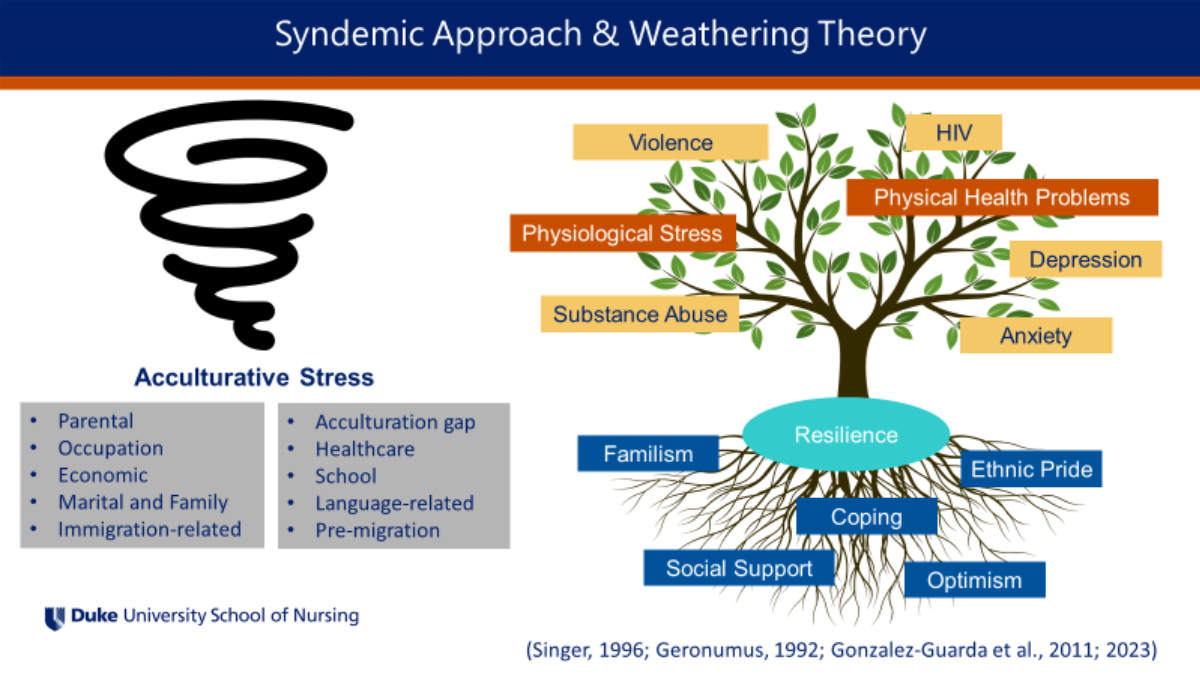
We take a syndemic approach to our work, which means we look at how multiple health issues—like violence, substance use, HIV, and mental health—happen together in Latino communities in the U.S. These issues don’t exist in isolation. They develop over time, across generations, and are shaped by the experience of adapting to life in a new country (acculturation).¹
Unlike traditional public health approaches that focus on one issue at a time, a syndemic perspective helps us understand the deeper, shared causes behind these problems. It also guides us in creating programs and policies that address those root causes.²
This syndemic—violence, substance use, HIV, and mental health—is driven by long-term stressors. These include acculturative stress, which is the pressure of adjusting to a new culture, and structural challenges like navigating schools that aren’t welcoming or accessing health care that’s hard to reach.² ³ These same social factors also increase the risk for other health problems, such as chronic stress and physical illnesses.⁵⁻⁷
We represent this syndemic visually as branches of one tree, inspired by how community members describe these issues.⁷⁻¹⁰ The winds in our image symbolize acculturative stress—an environmental force that shapes the health of Latino communities in the U.S. This idea connects to weathering theory, which explains how constant exposure to stress wears down the body over time.¹¹
Yet, despite these challenges, Latino immigrants continue to thrive. Like a tree that grows stronger in a storm, our communities deepen their roots. The SER Familia team builds on this resilience by strengthening what already makes Latino families strong: family and social support, coping skills, cultural pride, and hope in the American Dream. We call this approach “root-focused” syndemic strategies.
- Singer, M. C., Erickson, P. I., Badiane, L., Diaz, R., Ortiz, D., Abraham, T., & Nicolaysen, A. M. (2006). Syndemics, sex and the city: understanding sexually transmitted diseases in social and cultural context. Social science & medicine, 63(8), 2010-2021.
- González‐Guarda, R. M., Florom‐Smith, A. L., & Thomas, T. (2011a). A syndemic model of substance abuse, intimate partner violence, HIV infection, and mental health among Hispanics. Public health nursing, 28(4), 366-378.
- Gonzalez-Guarda, R. M., McCabe, B. E., Nagy, G. A., Stafford, A. M., Matos, L., Lu, M., ... & Cervantes, R. C. (2023). Acculturative stress, resilience, and a syndemic factor among Latinx immigrants. Nursing research, 72(4), 249-258.
- Tolstokoraya, Y., Gonzalez-Guarda, R., & Stafford, A. M. (2025). Acculturative Stress, Resiliency Factors, and Depressive Symptoms in Latino/a/e Emerging Adult Immigrants: Differences by College Attendance Status. Hispanic health care international : the official journal of the National Association of Hispanic Nurses, 15404153251383130. Advance online publication. https://doi.org/10.1177/15404153251383130
- Gonzalez-Guarda, R. M., Pan, W., Buzelli, P., Mack, B., McCabe, B. E., Stafford, A., ... & Walker, J. K. L. (2024). Trajectories of physiological stress markers over time among Latinx immigrants in the United States: Influences of acculturative stressors and psychosocial resilience. Social Science & Medicine, 362, 117429.
- Zhan, C., Nagy, G. A., Wu, J. Q., McCabe, B., Stafford, A. M., & Gonzalez-Guarda, R. M. (2022). Acculturation stress, age at immigration, and employment status as predictors of sleep among Latinx immigrants. Journal of immigrant and minority health, 24(6), 1408-1420.
- Gonzalez-Guarda, R. M., Stafford, A. M., Nagy, G. A., Befus, D. R., & Conklin, J. L. (2021). A systematic review of physical health consequences and acculturation stress among Latinx individuals in the United States. Biological Research for Nursing, 23(3), 362-374.
- De Santis, J. P., Gonzalez-Guarda, R., Provencio-Vasquez, E., & Deleon, D. A. (2014). The Tangled Branches (Las Ramas Enredadas) Sexual Risk, Substance Abuse, and Intimate Partner Violence Among Hispanic Men Who Have Sex With Men. Journal of Transcultural Nursing, 25(1), 23-32.
- Gonzalez-Guarda, R. M., Vasquez, E. P., Urrutia, M. T., Villarruel, A. M., & Peragallo, N. (2011b). Hispanic women’s experiences with substance abuse, intimate partner violence, and risk for HIV. Journal of Transcultural Nursing, 22(1), 46-54.
- Gonzalez-Guarda, R. M., Ortega, J., Vasquez, E. P., & De Santis, J. (2010). La mancha negra: Substance abuse, violence, and sexual risks among Hispanic males. Western Journal of Nursing Research, 32(1), 128-148.
- Geronimus, A. T. (1992). The weathering hypothesis and the health of African-American women and infants: evidence and speculations. Ethnicity & disease, 207-221.
Nuestro enfoque
Adoptamos un enfoque sindémico en nuestro trabajo, lo que significa que analizamos cómo múltiples problemas de salud —como la violencia, el consumo de sustancias, el VIH y la salud mental— se presentan de forma conjunta en las comunidades latinas de Estados Unidos. Estos problemas no existen de forma aislada. Se desarrollan con el tiempo, a lo largo de generaciones, y están influenciados por la experiencia de adaptarse a la vida en un nuevo país (aculturación).¹
A diferencia de los enfoques tradicionales de salud pública que se centran en un solo problema a la vez, una perspectiva sindémica nos ayuda a comprender las causas subyacentes y compartidas de estos problemas. También nos guía en la creación de programas y políticas que aborden estas causas fundamentales.²
Esta sindemia —violencia, consumo de sustancias, VIH y salud mental— está impulsada por factores estresantes a largo plazo. Estos incluyen el estrés aculturativo, que es la presión de adaptarse a una nueva cultura, y desafíos estructurales como lidiar con escuelas poco acogedoras o acceder a atención médica de difícil acceso.² ³ Estos mismos factores sociales también aumentan el riesgo de otros problemas de salud, como el estrés crónico y las enfermedades físicas.⁵⁻⁷
Representamos esta sindemia visualmente como las ramas de un árbol, inspirados en cómo los miembros de la comunidad describen estos problemas.⁷⁻¹⁰ Los vientos en nuestra imagen simbolizan el estrés aculturativo, una fuerza ambiental que influye en la salud de las comunidades latinas en Estados Unidos. Esta idea se relaciona con la teoría del desgaste, que explica cómo la exposición constante al estrés debilita el cuerpo con el tiempo.¹¹
Sin embargo, a pesar de estos desafíos, los inmigrantes latinos continúan prosperando. Como un árbol que se fortalece con la tormenta, nuestras comunidades profundizan sus raíces. El equipo de SER Familia se basa en esta resiliencia fortaleciendo lo que ya hace fuertes a las familias latinas: el apoyo familiar y social, las habilidades de afrontamiento, el orgullo cultural y la esperanza en el sueño americano. A este enfoque lo llamamos estrategias sindémicas centradas en las raíces.
- Singer, M. C., Erickson, P. I., Badiane, L., Diaz, R., Ortiz, D., Abraham, T., & Nicolaysen, A. M. (2006). Syndemics, sex and the city: understanding sexually transmitted diseases in social and cultural context. Social science & medicine, 63(8), 2010-2021.
- González‐Guarda, R. M., Florom‐Smith, A. L., & Thomas, T. (2011a). A syndemic model of substance abuse, intimate partner violence, HIV infection, and mental health among Hispanics. Public health nursing, 28(4), 366-378.
- Gonzalez-Guarda, R. M., McCabe, B. E., Nagy, G. A., Stafford, A. M., Matos, L., Lu, M., ... & Cervantes, R. C. (2023). Acculturative stress, resilience, and a syndemic factor among Latinx immigrants. Nursing research, 72(4), 249-258.
- Tolstokoraya, Y., Gonzalez-Guarda, R., & Stafford, A. M. (2025). Acculturative Stress, Resiliency Factors, and Depressive Symptoms in Latino/a/e Emerging Adult Immigrants: Differences by College Attendance Status. Hispanic health care international : the official journal of the National Association of Hispanic Nurses, 15404153251383130. Advance online publication. https://doi.org/10.1177/15404153251383130
- Gonzalez-Guarda, R. M., Pan, W., Buzelli, P., Mack, B., McCabe, B. E., Stafford, A., ... & Walker, J. K. L. (2024). Trajectories of physiological stress markers over time among Latinx immigrants in the United States: Influences of acculturative stressors and psychosocial resilience. Social Science & Medicine, 362, 117429.
- Zhan, C., Nagy, G. A., Wu, J. Q., McCabe, B., Stafford, A. M., & Gonzalez-Guarda, R. M. (2022). Acculturation stress, age at immigration, and employment status as predictors of sleep among Latinx immigrants. Journal of immigrant and minority health, 24(6), 1408-1420.
- Gonzalez-Guarda, R. M., Stafford, A. M., Nagy, G. A., Befus, D. R., & Conklin, J. L. (2021). A systematic review of physical health consequences and acculturation stress among Latinx individuals in the United States. Biological Research for Nursing, 23(3), 362-374.
- De Santis, J. P., Gonzalez-Guarda, R., Provencio-Vasquez, E., & Deleon, D. A. (2014). The Tangled Branches (Las Ramas Enredadas) Sexual Risk, Substance Abuse, and Intimate Partner Violence Among Hispanic Men Who Have Sex With Men. Journal of Transcultural Nursing, 25(1), 23-32.
- Gonzalez-Guarda, R. M., Vasquez, E. P., Urrutia, M. T., Villarruel, A. M., & Peragallo, N. (2011b). Hispanic women’s experiences with substance abuse, intimate partner violence, and risk for HIV. Journal of Transcultural Nursing, 22(1), 46-54.
- Gonzalez-Guarda, R. M., Ortega, J., Vasquez, E. P., & De Santis, J. (2010). La mancha negra: Substance abuse, violence, and sexual risks among Hispanic males. Western Journal of Nursing Research, 32(1), 128-148.
- Geronimus, A. T. (1992). The weathering hypothesis and the health of African-American women and infants: evidence and speculations. Ethnicity & disease, 207-221.