Rural Health Insights: Duke Nursing Students Partner with Pamlico County
Duke Nursing students reached more than 700 Pamlico County community members through health screenings, education, and emergency response training.
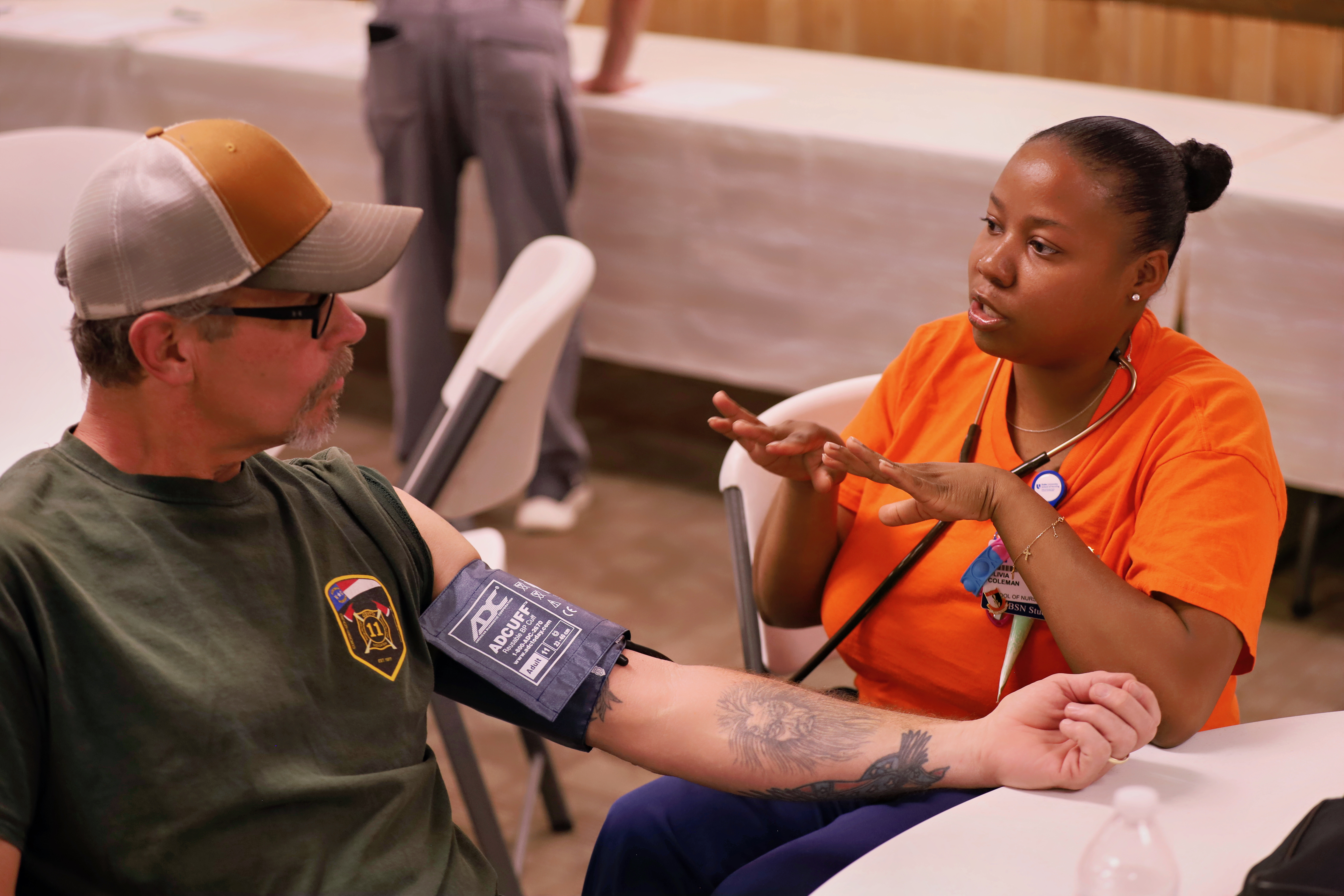
On a recent trip to Pamlico County, Duke University School of Nursing pre‑licensure students reached more than 700 community members through health screenings, education, and emergency response training—meeting people where they live, learn, and gather.
The students are part of the Mobile Prevention and Care Team (M‑PACT), a Duke University School of Nursing program that embeds nursing students into communities to deliver health screenings and education while gaining hands‑on experience in public and rural health. Over the course of the visit, M‑PACT students partnered with local schools, community organizations, and first responders across the county, integrating healthcare into everyday community life.
Their work included:
- Screening more than 440 children for vision acuity at Arapahoe Charter School
- Teaching yoga, handwashing, and emotional regulation to pre‑schoolers with Pamlico Partnership for Children
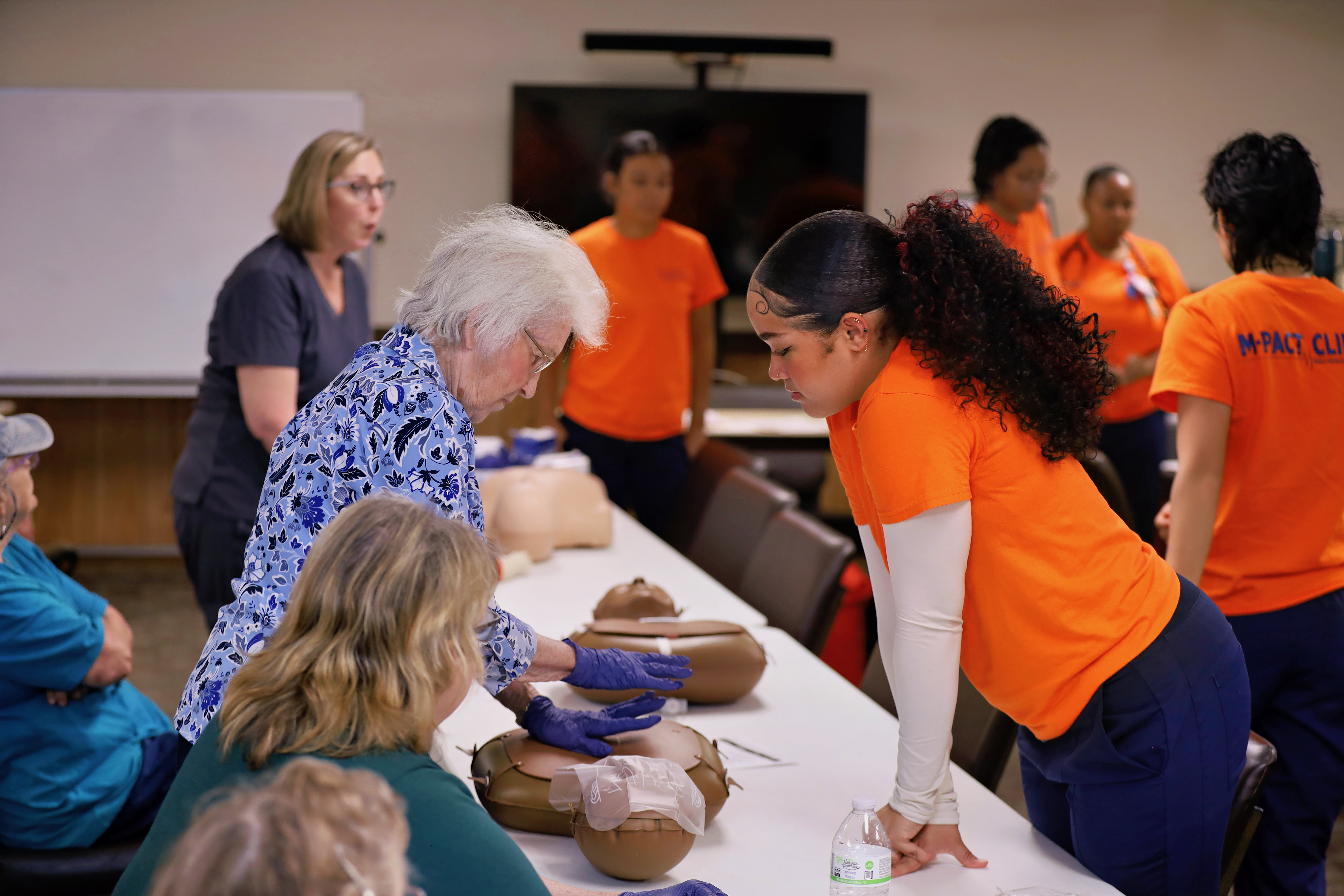
- Training 20 community members in CPR and AED use
- Leading wellness sessions focused on physical activity and mindfulness with older adults at the Pamlico Senior Center
- Engaging more than 200 K–3 students through hands‑on lessons on nutrition, hygiene, and staying active
- Facilitating age‑appropriate mental health discussions with 150 fourth- and fifth‑grade students
- Learning firsthand about rural emergency response alongside Pamlico County EMS
For Daniel Crowder, a Duke pre‑licensure nursing student from a rural community outside Greensboro, the experience reflects what drew him to M‑PACT in the first place.
“I joined M‑PACT because I thought it would be an opportunity to become more well‑rounded as a nurse,” Crowder said. “Being in these communities shows you parts of healthcare that you don’t always see in a hospital setting.”
Bringing Care to Where People Are
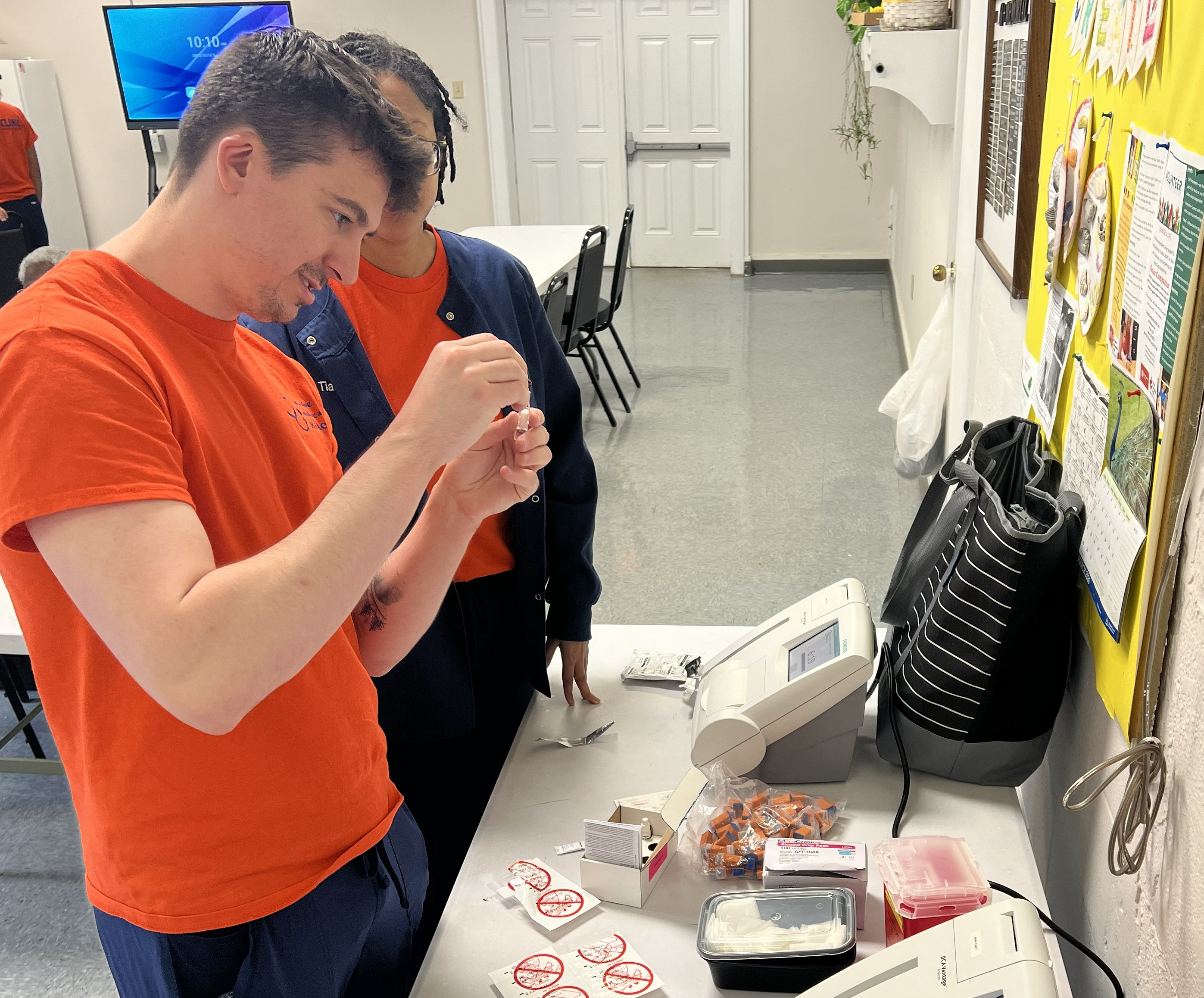
A defining aspect of M‑PACT is that students don’t operate separately from the community, but rather integrate their work into existing community infrastructure. Screenings and education are often incorporated into existing events, reducing barriers to access and making care feel approachable rather than clinical.
“We did a veterans’ event in Henderson, North Carolina, and provided services like hypertension screening, BMI, and A1C checks,” Crowder said. “Even though the event wasn’t specifically about healthcare, we made those screenings convenient for the veterans.”
Crowder emphasized that these seemingly small interventions can have significant effects, particularly in rural or under‑resourced areas.
“These types of screenings that may seem small can end up having a really big impact,” he said, referencing vision and growth screenings for school‑aged children that can catch concerns early and connect families with resources they might not otherwise access.
In addition to screenings, students focus heavily on delivering education that is realistic and relevant. Crowder noted that in many rural communities, healthcare is not always a top priority, not because people don’t care, but because structural barriers make it difficult.
“In some [underserved] areas, healthcare might not be a priority because they don’t have the means to make it a priority,” he said.
When students identify concerns, they work with community partners to refer individuals to local and regional resources and explain next steps in clear, practical terms.
“Bridging the access gap is one of the most important things we do,” Crowder said.
Meeting Patients Where They Are
The work also reflects the School of Nursing’s broader emphasis on culturally conscious, patient‑centered care. Rather than prescribing one‑size‑fits‑all solutions, students are trained to consider the Social Drivers of Health (SDoH) that influence health in rural and underserved populations.
“At Duke, we emphasize meeting the patient where they are,” Crowder said. “Rather than saying we have a concrete set of instructions they need to follow to the T—like five servings of fruits and vegetables a day—how can we suggest helpful, achievable changes?”
He added that community‑based care demands self‑reflection as much as clinical skill.
“Before we consider any kind of intervention, we always have to think about what’s going on for that person and what biases we may be coming in with,” Crowder said. “We want to be advocates for everybody we see, and we always have that at the front of our minds when we go into the community.”
Building Trust Through Presence
For Crowder, the most meaningful part of the Pamlico County experience wasn’t a single screening or lesson but the relationships that developed over time.
“I went to grab lunch and was wearing the M‑PACT shirt,” he said. “Several residents at the restaurant recognized it and asked, ‘How long are you guys going to be here? What events are you doing? Are you doing the same thing as last year?’ It really felt like Duke had developed a relationship with this community.”
That continuity matters, particularly in areas where access to healthcare is limited. In parts of Pamlico County, residents may be 30 to 40 minutes away from the nearest hospital—and even farther from a Level I trauma center.
“If you have a heart attack in Durham, you go straight to Duke and have all the resources you need right away,” Crowder said. “In a rural setting, options and resources are more limited.”
Through M‑PACT, students also learn how policy, infrastructure, and innovation intersect with care delivery. Crowder said discussions often include public health data and emerging solutions such as telehealth.
“We have patients in Pamlico County who meet with their Duke primary care provider through the internet without even having to leave their community,” he said.
Preparing Nurses and Strengthening Communities
Crowder, who has accepted a post‑graduation position with the UNC‑Hillsborough Emergency Department, hopes to return to rural healthcare later in his career. He believes the lessons gained through M‑PACT are essential for all healthcare professionals, regardless of where they ultimately practice.
“Learning how to manage complex and critical situations with fewer resources is a useful skillset for anybody,” he said. “Ultimately, being able to engage and communicate with people from all different backgrounds and identities is what makes a really well‑rounded healthcare professional.”
Programs like M‑PACT demonstrate how embedding students in communities creates shared value: communities gain access to care, education, and advocacy, while students develop the clinical skills, cultural awareness, and perspective that will shape them as future nurses.
“I strongly believe rotations and clinical experiences in the community and in rural healthcare would be helpful for everyone,” Crowder said.