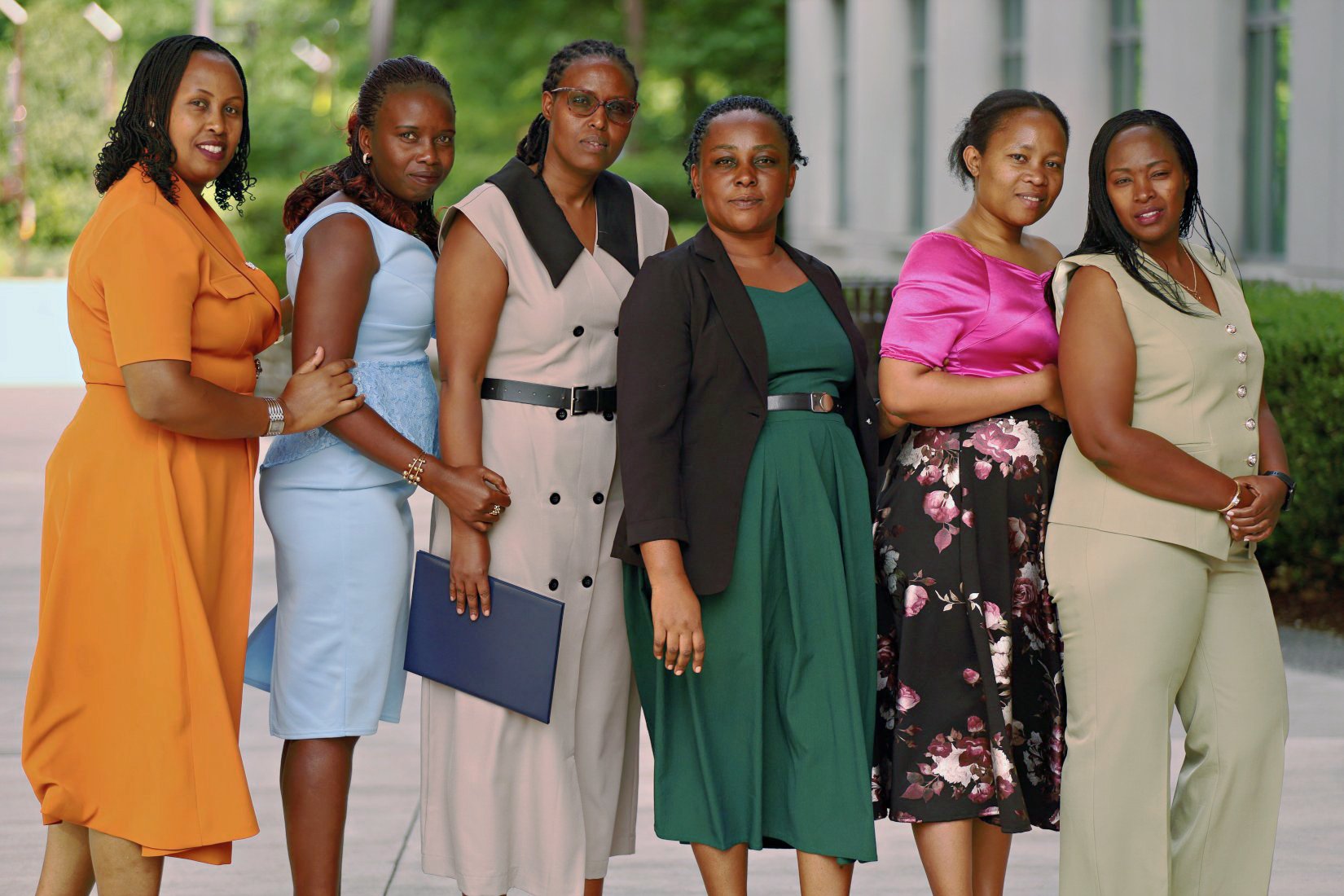
A Historic First: Six Rwandan Nurses Earn DNP Degrees
Six nurses from Rwanda have earned their Doctor of Nursing Practice (DNP) degrees from the Duke University School of Nursing, becoming the first known DNP graduates in Rwanda and across the African continent.
Duke University School of Nursing is celebrating a historic milestone for nursing leadership globally. Six nurse experts from Rwanda have graduated with their Doctor of Nursing Practice (DNP) degrees and are the first known DNP graduates in Rwanda and on the African continent.
DNP‑prepared nurses are practice‑focused leaders who translate evidence into care delivery, lead quality improvement and evaluation efforts, and drive system‑level change. With advanced training in clinical scholarship, population health, and health systems leadership, they partner across disciplines to improve outcomes, strengthen care delivery, and inform health policy.

The Rwandan graduates completed the program through a partnership between Duke University School of Nursing and the University of Rwanda School of Nursing. In the weeks leading up to Commencement, they successfully completed and presented their DNP scholarly projects in Kigali.
“This milestone reflects what is possible when rigorous DNP education is paired with deep local partnership and highly motivated students,” said Anne Derouin, Vice Dean of Academic Affairs, who leads academic affairs at Duke University School of Nursing. “These nurse leaders each demonstrated an ability to build and lead teams, improve health outcomes of infants and children in a variety of clinical settings, and shape the future of health care delivery across Rwanda during their academic journey.”
“For Rwanda, this milestone is about building lasting capacity within our health system,” said Oliva Bazirete, Associate Professor of Midwifery and Dean of the School of Nursing and Midwifery at the University of Rwanda. “These graduates are applying doctoral‑level nursing expertise to address Rwanda’s most pressing clinical and system challenges—improving care delivery, strengthening hospital practices, and shaping a future workforce prepared to lead sustainable health improvements across the country.”
Scholars Advancing Care Across Rwanda
Leading up to graduation, the students delivered oral presentations to large audiences of healthcare providers, administrators, and policymakers at Rwanda’s three tertiary hospitals: King Faisal Hospital, CHUK, and the Rwanda Military Teaching Hospital. Their projects demonstrated extraordinary interprofessional collaboration and highlighted the vital role of DNP‑prepared nurse leaders working in concert with multidisciplinary teams to advance health care quality and outcomes across Rwanda:
- Miriam Batamuriza, a neonatal nurse expert and midwife, implemented a family‑centered care protocol in the neonatal intensive care unit at King Faisal Hospital, standardizing practices such as kangaroo care, diapering, and father engagement to strengthen early bonding and support preterm infant growth and development.
- Ruth Dusabe, a neonatal nursing expert, introduced a NICU “quiet time” protocol at Rwanda Military Hospital, resulting in more than a 10% reduction in ambient noise and decreased newborn heart rates—signaling reduced physiologic stress and improved healing conditions for preterm infants.
- Delphine Mukandayisaba, a pediatric critical care nurse, led the implementation of a standardized Pediatric Early Warning Score (PEWS) assessment tool at Rwanda Military Hospital, enabling earlier intervention for at‑risk children; the initiative was so successful it was permanently adopted and integrated into the hospital’s electronic health record system ahead of schedule.
- Claudine Muteteli implemented the World Health Organization’s multimodal hand hygiene framework in the NICU and neurosurgery units at Rwanda Teaching Hospital (CHUK), increasing hand hygiene compliance from less than 30% to nearly 90% and significantly reducing infection risk, saving lives and health care costs.
- Francine Nyirangorore, a pediatric nurse expert, established a standardized play‑based intervention in the Pediatric Oncology Ward at Rwanda Teaching Hospital (CHUK), reducing pain medication use and nursing workload while improving patient and family well‑being; the program has been sustained and is planned for expansion to other pediatric units.
- Alphonsine Umutoni Uwese, a pediatric nursing expert, implemented a newborn bilirubin screening protocol at King Faisal Hospital, now standard practice prior to discharge, providing an early, noninvasive method to prevent bilirubin‑related complications and improve long‑term infant health outcomes.
Each new Duke graduate emerges as a doctorally prepared clinical evaluation expert positioned to lead system‑level initiatives and contribute to the future of health care delivery nationwide.