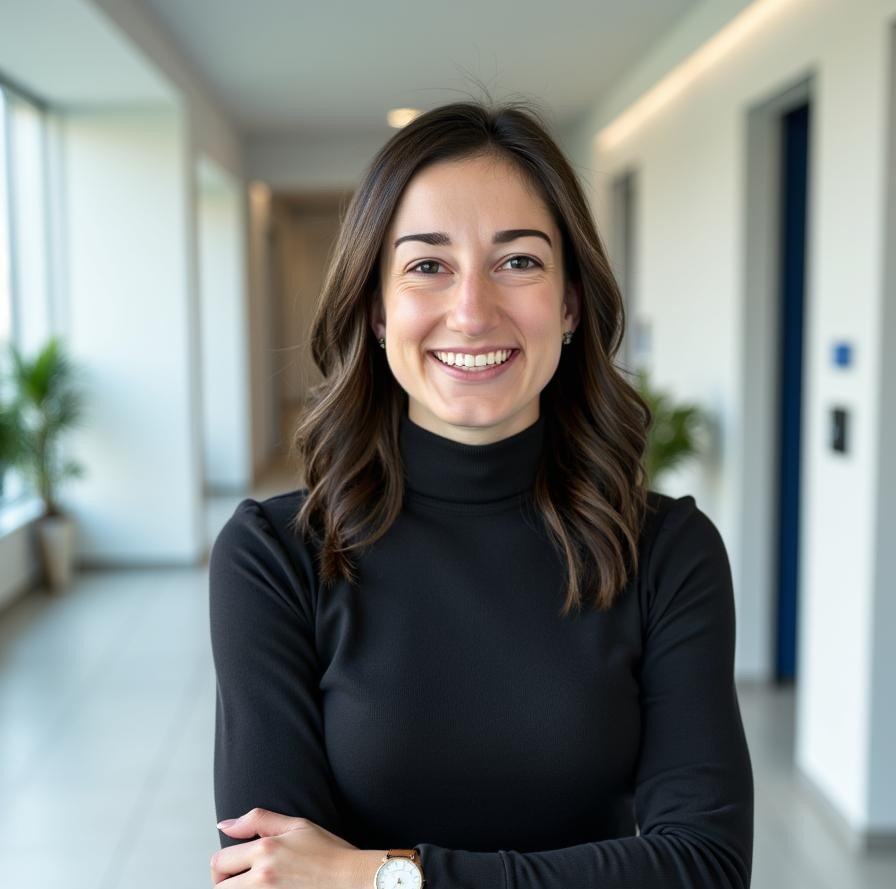
Nurse, Engineer, Innovator: Kimberly Coston Is Helping Nurses Change Healthcare
Alumna Kimberly Coston '21 has built an unconventional career at the intersection of nursing, engineering, and healthcare innovation, using her frontline clinical experience to help design, evaluate, and implement solutions that improve care delivery across Duke Health.
When Kimberly Coston arrived at Duke University School of Nursing, she had a specific career goal in mind.
After studying psychology as an undergraduate and working in a psychiatric hospital, she planned to become a psychiatric nurse practitioner. What she did not anticipate was how many different directions a nursing career could take.
Today, Coston's work spans nursing, quality improvement, data analytics, and engineering. A 2021 Duke Nursing graduate, she currently serves as a management engineer in Duke Health's Quality Office, is pursuing a Duke graduate engineering degree in Design, Technology & Innovation, and recently completed Duke Health's inaugural RN Innovation Fellowship.
Her path illustrates a reality that is becoming increasingly common across healthcare: while many nurses build careers in direct patient care, others find opportunities in technology, operational improvement, product design, research, and healthcare innovation.
"I guess being at Duke made me realize there were other types of nursing," Coston said. "It almost never occurred to me before."
A Different Route to Nursing
Originally from Texas, Coston attended college in Colorado, where she studied psychology and recreation, and imagined a future working in wilderness programs or with the National Park Service. After graduation, she worked in wilderness therapy and then as a mental health technician in a psychiatric hospital. There, observing the nurses around her prompted a career change.
She eventually enrolled at Duke University School of Nursing and arrived in Durham expecting to remain focused on psychiatric nursing. But exposure to different specialties and clinical settings broadened her understanding of the profession.
After graduating in 2021, she accepted a position on Duke University Hospital's cardiothoracic step-down unit, an experience that sparked a new interest: not only caring for patients within healthcare systems, but also looking for ways to improve those systems.
Experimenting With Solutions
Part of that shift came from an unlikely place—Duke’s Innovation Co-Lab.
As a nursing student during the COVID-19 pandemic, Coston became a regular visitor to the Co-Lab, a makerspace that provides access to tools such as 3D printers, laser cutters and prototyping equipment. Coston took advantage of the opportunity to learn new skills and experiment with building solutions to everyday problems.
Some projects were ambitious, including an attempt to create a low-cost vein-finder device. Others were simple: organizational tools for personal protective equipment, storage solutions for frequently used supplies, and custom-designed holders for cramped patient rooms.
"I like finding the little annoying things that could be easily solved," Coston said.
The experience also introduced her to a broader idea: innovation may not always mean creating entirely new technologies, but making existing processes work better.
From Curiosity to Collaboration
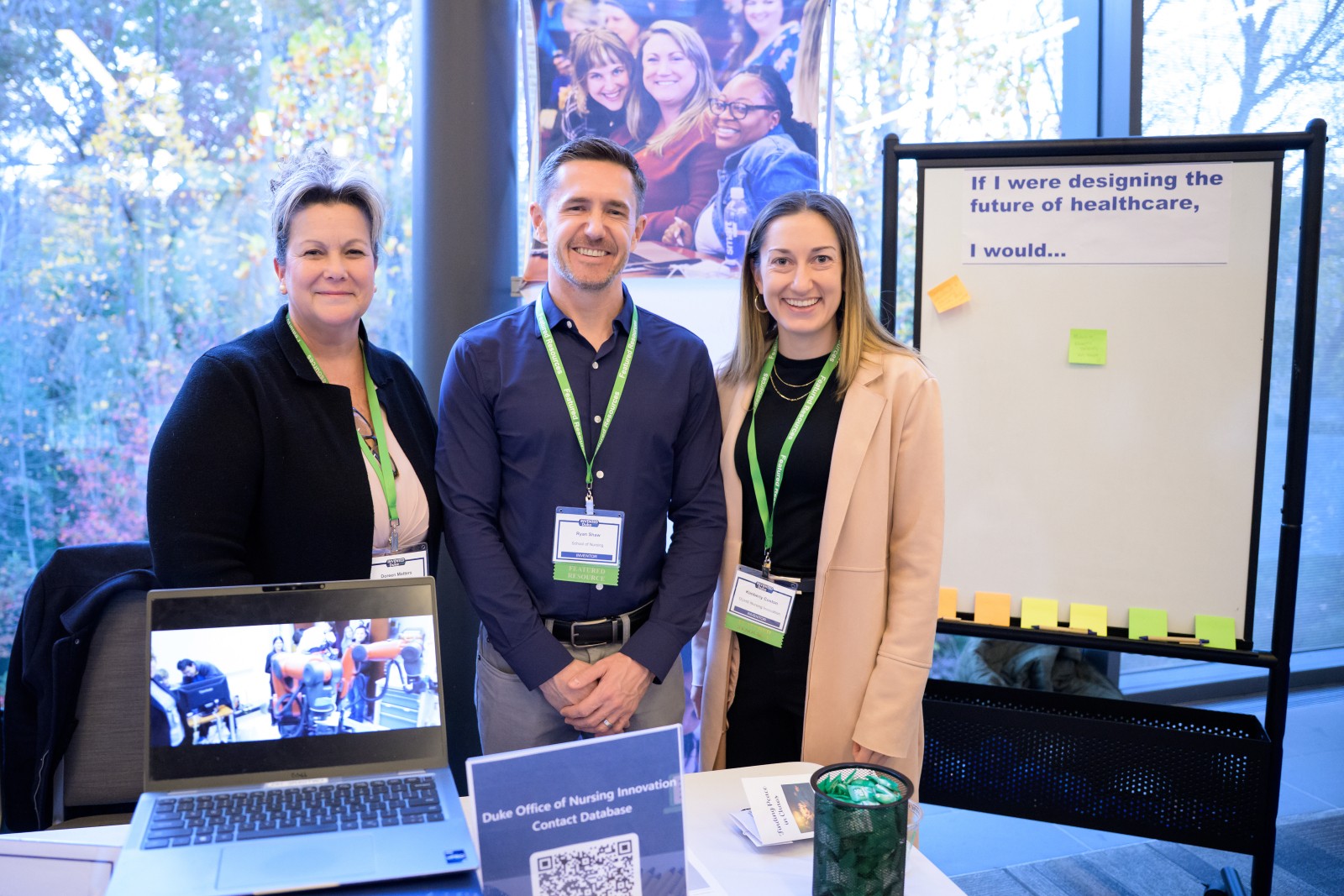
As Coston's interest in innovation grew, she began reaching out to leaders across Duke Health.
A conversation during a Nurses Week event led her to contact nursing leaders about innovation opportunities. She participated in innovation-focused projects and committees and connected with individuals working at the intersection of healthcare and technology.
One opportunity involved a Johnson & Johnson healthcare innovation challenge. Working with a multidisciplinary team, Coston helped develop a concept that combined artificial intelligence and virtual reality to support patient de-escalation efforts. The team ultimately finished among the competition's top entrants.
Those experiences shaped Coston’s view of leadership and collaboration inside a large academic health system.
"I think there's often this perception that there's a line between bedside nursing and senior leadership," she said. "But in my experience, people always responded."
That willingness to engage, she said, opened new doors.
"I think there's often this perception that there's a line between bedside nursing and senior leadership. But in my experience, people always responded."
Expanding Her Skill Set
While working clinically, Coston also began considering how to expand her technical knowledge, eventually pursuing graduate study in engineering.
At the time, she was particularly interested in product design, prototyping, and the development of physical solutions for healthcare environments.
After working on the cardiothoracic step-down unit, she transitioned into positions with the Behavioral Response Team, Rapid Response Team and Cardiac ICU. Along the way, she became increasingly involved in quality improvement initiatives and data-related projects.
In January, she joined Duke Health's Quality Office as a management engineer, a position focused on quality improvement and performance measurement, particularly around sepsis care. A significant portion of her work involves gathering, analyzing, and presenting data to both operational leaders and clinical teams.
The goal, she said, is to help clinicians better understand how systems are performing and identify opportunities for improvement.
"It's really about being the bridge between the clinical teams and the quality reporting side," she explained.
The RN Innovation Fellowship
Coston’s combined focus on clinical experience, technical interest, and innovation led to another opportunity: becoming the first participant in Duke Health's RN Innovation Fellowship.
The fellowship was created to give frontline nurses dedicated time to contribute to systemwide innovation initiatives. Modeled after the "innovation time" approach used in some industries, the program provides protected time away from routine responsibilities so nurses can focus on evaluating new products, processes, and evidence-based practices.
The pilot program was designed not only to advance organizational priorities, but also to allow nurses to develop project-management, leadership, and innovation skills while remaining connected to clinical practice.
For Coston, the fellowship represented a chance to devote focused time to work she had already been pursuing alongside her regular responsibilities.
As part of the fellowship, she helped evaluate two Duke Health innovation solutions and worked on pilot projects involving sepsis abstraction and behavioral care planning.
The experience offered a structured opportunity to test, implement, and assess solutions that could influence care delivery across the health system.
It also underscored the role nurses can play in shaping healthcare innovation.
“Nurses are in a unique position to improve healthcare because they experience these workflows firsthand,” Coston said. “That day-to-day perspective helps identify practical challenges and opportunities for improvement that aren't always visible at the organizational level.”
Looking Ahead
Coston hopes to continue combining nursing and engineering within a healthcare system, helping organizations implement new technologies and processes while maintaining the trust and engagement of frontline clinicians.
That challenge has become increasingly relevant as health systems evaluate artificial intelligence tools and other emerging technologies.
During innovation projects, Coston said she has observed how critical buy-in can be for successful adoption. Even promising technologies can struggle if clinicians do not trust them or see their value.
Her interest lies in helping bridge that gap between innovation and implementation.
"I want to be that bridge," she said.
A Broader View of Nursing
Reflecting on her path so far, Coston does not frame her journey as a departure from nursing. Instead, she views it as an example of the profession's breadth.
The path that began with psychology, continued through bedside nursing, and led into engineering, data analytics, and innovation has remained grounded in a common objective: supporting better care for patients and the clinicians who serve them.
For prospective nursing students, her experience offers a reminder that a nursing degree can open doors well beyond traditional roles.
"I want to help nurses do what they do best," Coston said.