The Duke Alumna Advancing Oncology Care at Duke Health
Bri Satterwhite, an alumna of Duke University School of Nursing, now serves as CNIV Nurse Leader at Duke Health’s Oncology Treatment Center, advocating for exceptional patient care.
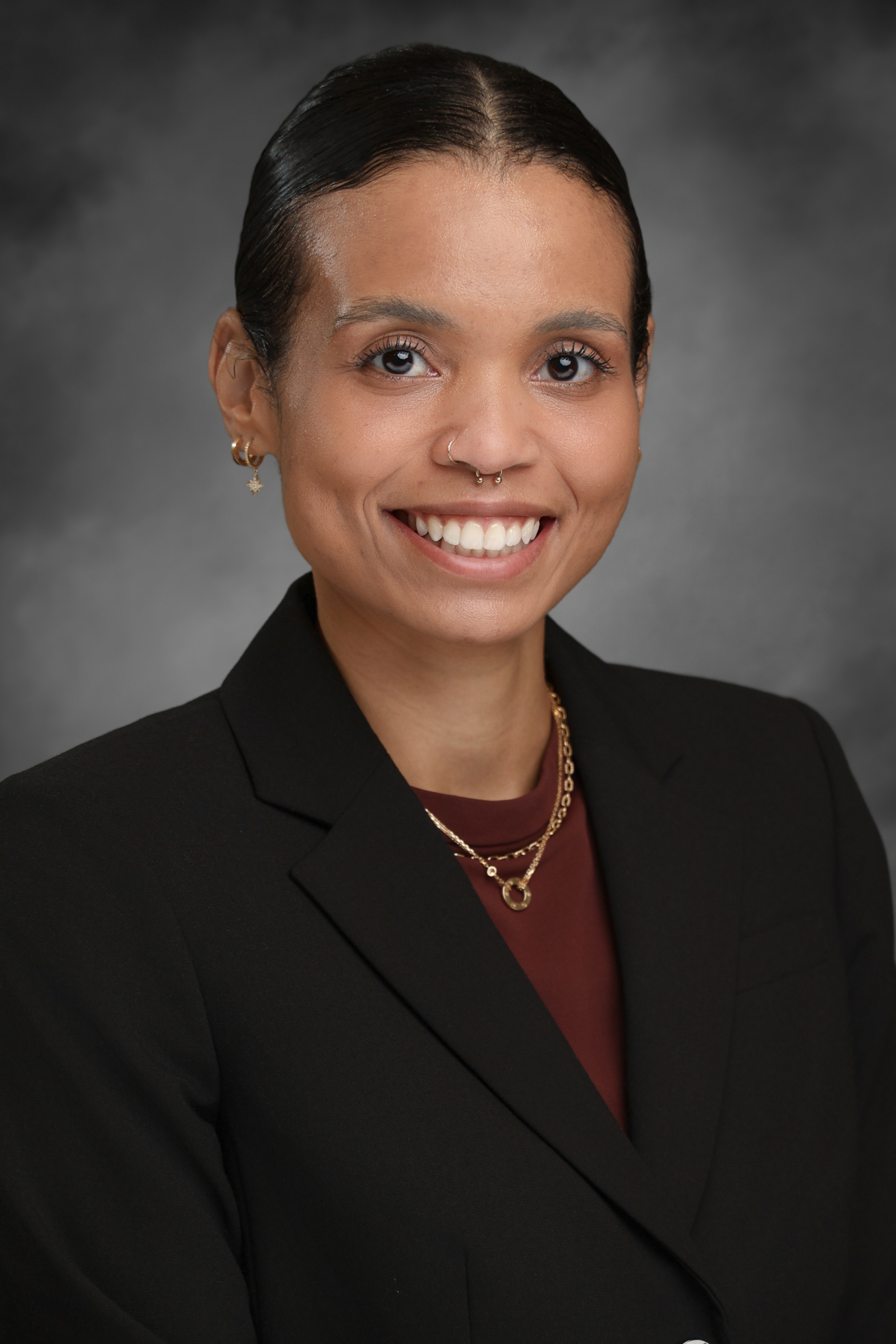
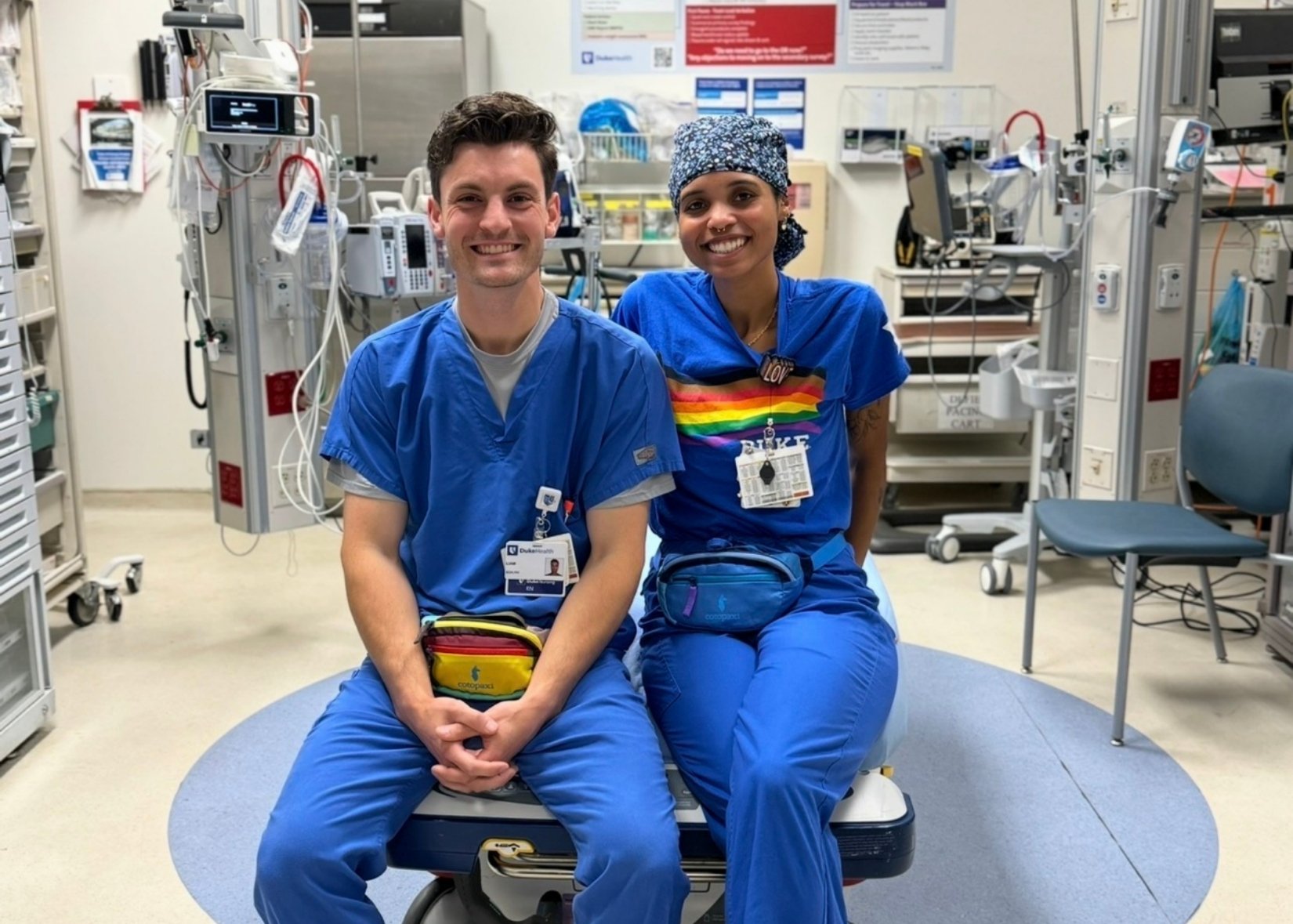
Bri Satterwhite graduated from Duke’s prelicensure nursing program in May 2023 and now works for Duke University Health System (DUHS). She began her career as a new graduate nurse in the Emergency Department, where she worked for approximately two and a half years, and then transitioned to the Duke Cancer Center as an oncology infusion nurse.
There, she has served as preceptor, charge RN, and resource RN, and she recently achieved Clinical Nurse 4 (CNIV) status, the highest tier on a hospital's clinical ladder program. Below, she discusses her journey from Duke’s nursing school to its health system and the impact she hopes to make as CNIV Nurse Leader of the Oncology Treatment Center.
How did your prelicensure degree from Duke University School of Nursing help prepare you for your roles in DUHS?
My experience at Duke University School of Nursing gave me a strong clinical foundation while also teaching me how to think critically in fast-paced, high-acuity environments. The program emphasized evidence-based practice, interdisciplinary collaboration, and leadership from the very beginning, which prepared me well for the intensity of working in the Emergency Department at Duke University Hospital as well as the ability to hone in on compassion and develop meaningful relationships with patients and families as I transitioned to the Oncology Treatment Center.
What inspired you to pursue and obtain your CNIV status, and what was that process like?
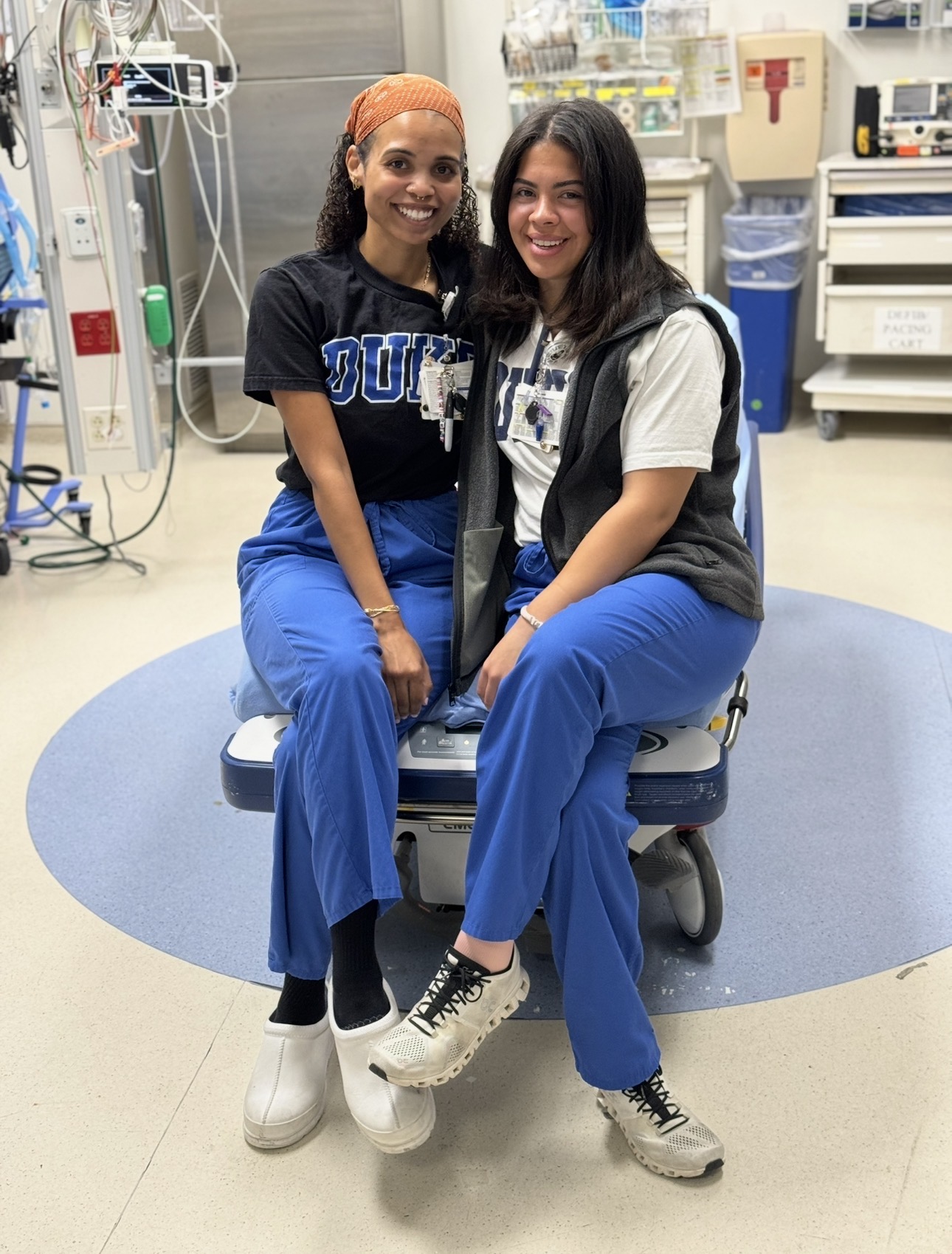
I wanted to continue growing both clinically and within leadership. For me, pursuing my CNIV status was an opportunity to challenge myself and become a well-rounded representation of the Duke Health core values. The process required a great deal of reflection, planning, and collaboration. It involved demonstrating leadership within the department as well as serving as an educator to my peers on a topic that means a lot to me and my practice.
In order to achieve my CNIV status, I completed a project which focused on how hypersensitivity reaction symptoms to certain IV chemotherapies may present differently on Black and Brown patients. Following unit-wide education highlighting differences of what rashes, cyanosis, and hives may look like on darker skin tones, our staff demonstrated a ~27% increase of knowledge and overall comfortability of being able to recognize these specific symptoms within our patient population.
I am currently working to expand this education to additional oncology units across the region and to incorporate it into new staff training programs, ultimately supporting safer and more equitable patient care.
What do you hope to accomplish in your position as CNIV Nurse Leader of the Oncology Treatment Center?
As a CNIV Nurse Leader, I hope to continue fostering an environment where nurses feel empowered to grow professionally and provide exceptional patient care. I also look to mitigate staff burnout while offering maximal support to staff. Long term, I want to help advance innovative nursing practices within oncology care while ensuring our patients continue to receive safe, high-quality, and well-informed care.
What has motivated you to remain at Duke—first for your education, and then for your career?
What has motivated me is the culture of excellence and innovation that exists across both academic and clinical settings. From my time as a nursing student to my current leadership role, I have consistently been surrounded by mentors and colleagues who encourage growth, lifelong learning, and collaboration. Duke has provided opportunities for me to expand my clinical skills, pursue leadership development, and contribute to meaningful initiatives that impact patient care. Staying within the Duke system has allowed me to continue evolving personally and professionally while serving a patient population I care deeply about.
In September 2025, I was nominated for a DAISY Award for an encounter where I was caring for a patient when another patient had a reaction to one of the chemotherapy agents. It was already a very busy day, and I had many tasks on my plate, but I was still able to prioritize care appropriately by immediately providing aid to the patient having the allergic reaction while delegating roles to ensure the other patients were properly cared for in that time. The DAISY nomination meant so much to me—not only was I recognized for caring so much for my patients, but it also verified how I'm able to seamlessly utilize my critical thinking and leadership skills in everyday situations. My education and progressive roles at Duke have supported me in that.
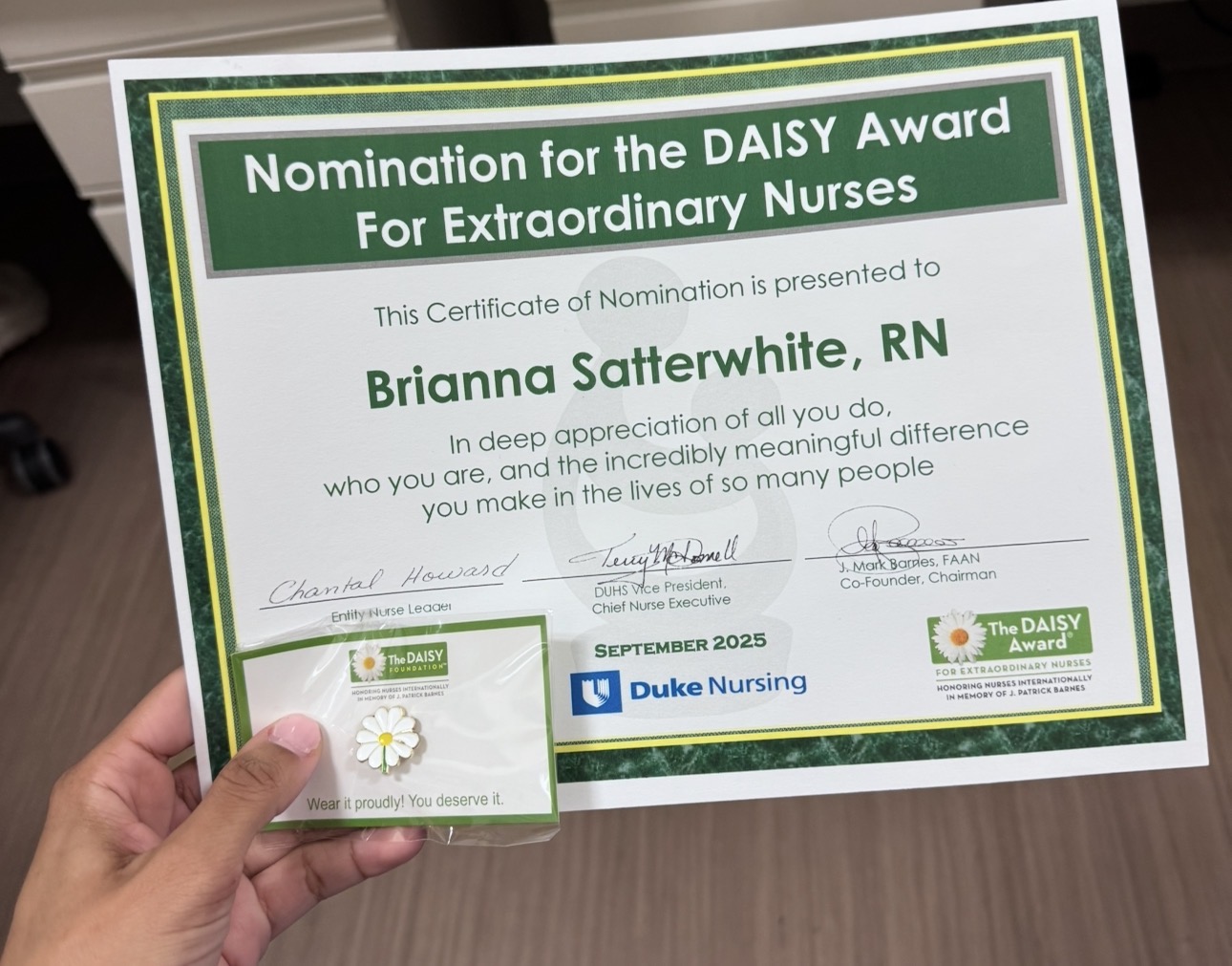
Satterwhite's DAISY Award Certificate of Nomination
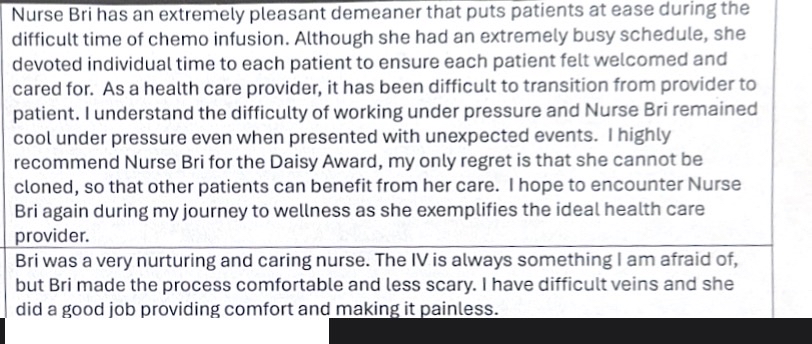
Patient's written nomination of Satterwhite
Lastly, when you’re not working, how do you enjoy spending your time?
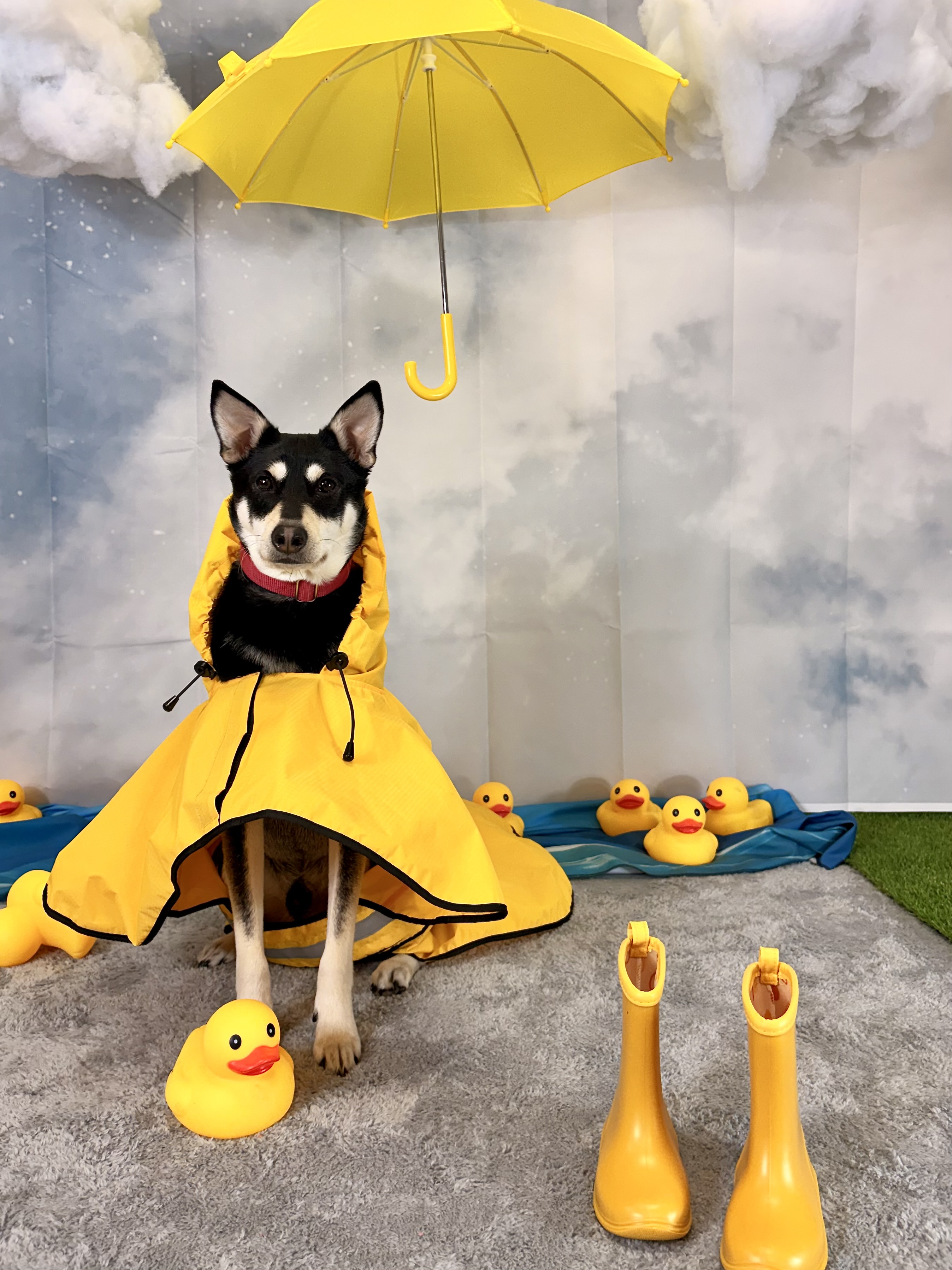
In my spare time I LOVE to be with my dog and take him outdoors for walks, runs and hikes. I have included a picture of him at his doggy daycare photoshoot. He is quite the model. I'm also currently training for the Bull City half marathon coming up in October.