
Summer Research Fellowship Opens Doors to Nursing Science Careers for Undergraduate Students
The Duke University School of Nursing Summer Research Fellowship recently concluded its third year, providing undergraduate nursing students from North Carolina Central University with mentored, hands-on research experiences that build skills, confidence, and interest in pursuing careers in nursing science.
This summer, three undergraduate nursing students spent part of their break doing something many students do not encounter until graduate school: contributing to active research projects alongside nurse scientists.
Hosted by the Ruby L. Wilson Center for Nursing Science and Innovation at Duke University School of Nursing, the Summer Research Fellowship recently concluded its third year. The program is designed to introduce undergraduate nursing students to research careers while providing mentorship, professional development, and hands-on experience working with faculty-led research teams.
The fellowship partners with North Carolina Central University (NCCU) and Watts College of Nursing to create research opportunities for rising junior and senior Bachelor of Science in Nursing students who may not otherwise have access to research experiences. Through mentored research, structured seminars, and cohort-based learning, the program aims to spark interest in nursing science careers and expand pathways into research-focused graduate education.
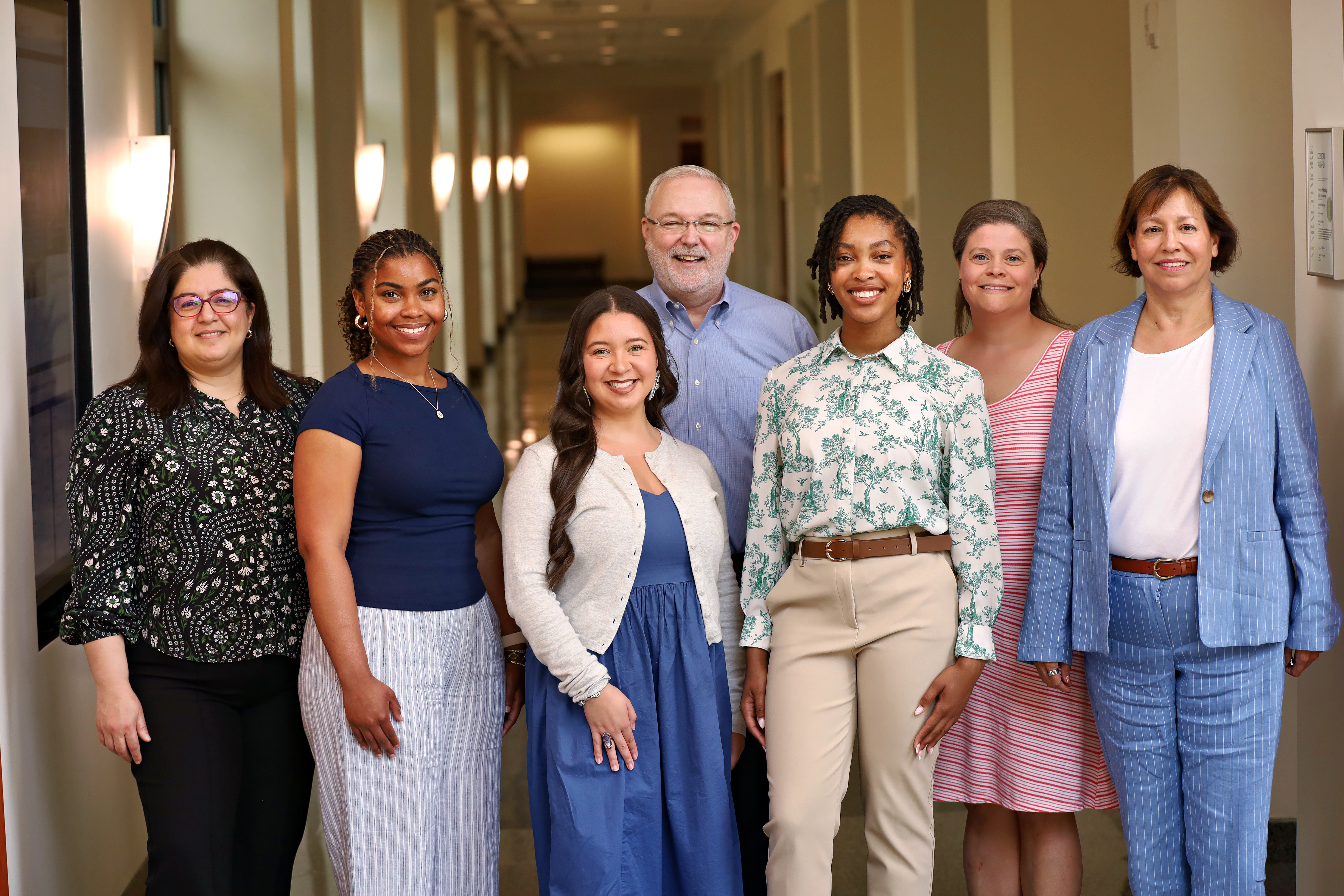
Students participate in paid research positions during June and July, dedicating approximately six to eight hours each week to research and professional development activities. Fellows are paired with Duke School of Nursing faculty mentors and PhD student mentors whose expertise aligns with their interests.
In addition to participating in active research projects, students attend seminars focused on graduate school preparation, leadership, policy, professional well-being, communication skills, research dissemination, and career development.
"The Summer Research Fellowship was created to give undergraduate nursing students early exposure to the research process and help them envision themselves as future nurse scientists," said Dr. Sharron Docherty, Vice Dean for Research Affairs and Innovation. "By connecting students with faculty and PhD student mentors and engaging them in meaningful research experiences, we're helping build confidence, research skills, and awareness of the many ways nurses can influence health outcomes through science."
This year's fellows worked with faculty mentors whose research spans maternal health, mental health equity, artificial intelligence in healthcare, cancer, rural health, and social determinants of health:
- Christyn Hurey (North Carolina Central University), mentored by Dr. Nancy Crego
- Kimberly Johnson (North Carolina Central University), mentored by Dr. Mariam Kayle
- Jazmine Locklear (North Carolina Central University), mentored by Dr. Michael Cary
For Kimberly Johnson, the experience provided a new perspective on the role of nursing research in improving health care.
"This experience gave me invaluable insight into the role of nurse scientists and the impact that research has on improving patient care outcomes and advancing healthcare,” Johnson said. "As someone who is passionate about bridging scientific discovery with compassionate patient care, this fellowship affirmed that I am on the right path. I departed with new knowledge, meaningful connections, and an even greater sense of purpose for the work I hope to do in the future."
For fellow Jazmine Locklear, the program offered an opportunity to work at the intersection of technology, education, and health care innovation.
"This experience gave me the opportunity to work alongside an incredible interdisciplinary research team exploring how artificial intelligence can be responsibly integrated into healthcare and health professions education," Locklear said. "From analyzing research data and developing educational content to helping create AI learning modules and an interactive game-based learning platform, I was able to see firsthand how research can move beyond publications to create meaningful educational change."
Beyond individual research projects, program leaders say the fellowship's cohort model is a key component of the experience. Students participate together in leadership and professional development sessions, receive guidance on graduate school pathways, practice interviewing and communication skills, and present their work during a culminating poster session. Those experiences are intended not only to build technical research competencies but also to foster a sense of belonging and community among aspiring nurse scientists.
For Johnson, Locklear, and Hurey, the summer offered more than a research experience. It provided a glimpse into how nurses can contribute to improving health not only at the bedside, but also through discovery, innovation, and scientific inquiry.