Finding Common Ground: Two Fellows, One Mission for Rural Health Equity
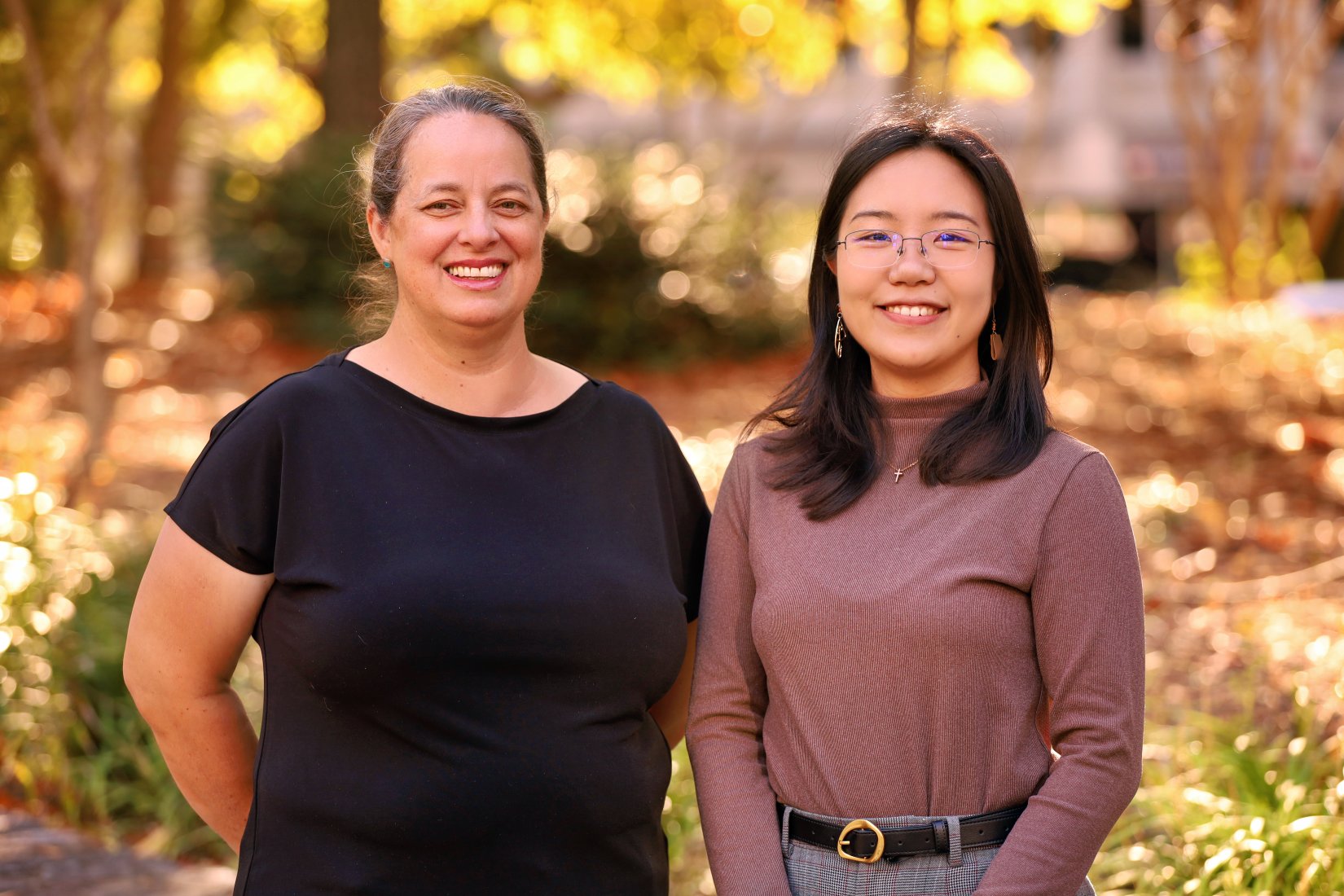
Just a few short weeks into their fellowships with the Duke Interdisciplinary Hub for Rural Health Equity, both Jinni Tang and Suzanne Daly found themselves returning to a similar idea.
For Tang, a public health researcher newly arrived from Texas, it is a lesson rooted in years of community health work: meaningful change begins with understanding people's lived experiences. For Daly, a nurse, researcher, and longtime public health practitioner, it is a principle she first learned while making home visits to families across North Carolina.
Though they arrived at rural health through different professional paths, both fellows are bringing complementary perspectives to the Hub's work across North Carolina communities. Together, their experiences highlight the value of listening, partnership, and prevention in advancing health equity.
Drawn to Communities and Prevention
Tang came to Duke with a background in public health and community health education. Looking back on her academic journey, she traces it to a question that has stayed with her for years.
"I've always been fascinated by one question: If we know so much about preventing disease nowadays, why doesn't prevention reach everyone who could benefit from it?"
That question guided her studies at Baylor University, where she earned bachelor's and master's degrees in public health, and later through doctoral training in health promotion and behavioral science at UTHealth Houston. Along the way, she worked with local health departments, supported chronic disease and maternal health initiatives, and participated in global community health efforts in Brazil and the Dominican Republic.
Those experiences reinforced a belief that health outcomes are shaped by far more than clinical care.
"Improving health isn't just about healthcare," Tang said. "It's about education, community partners, and understanding people's daily realities."
Daly's path began in nursing. As a student at the University of North Carolina at Chapel Hill, she completed a community health rotation with the Child Service Coordination Program in Wake County and discovered the type of work that energized her.
"I loved the home visits, and going into people's homes, and working with families, and that was in my wheelhouse."
After gaining experience in clinical settings, including Duke's pediatric bone marrow transplant unit, Daly eventually returned to community-based public health work at the Durham County Health Department.
Years later, after completing a PhD and conducting health disparities research, Daly found rural health through her work with the Center for Rural Health and Nursing at the University of Texas at Arlington.
"I really fell in love with rural health working at the center and doing research there," she said. "I find it fascinating, and such an important and overlooked part of our healthcare system, and just in general, our communities as well."
Looking Beyond Access to Care
When discussions turn to rural health, access to care often dominates the conversation. Both Tang and Daly agree that it remains critical, but they see other challenges that deserve greater attention.
For Daly, transportation stands out.
"It is a huge, huge issue in rural areas, and it's one that I think gets glossed over a lot when we talk about rural healthcare and access to care in rural areas."
The challenge becomes especially apparent when rural residents must travel long distances for routine appointments, specialty care, or emergency services.
Tang sees another gap: access to prevention.
"Many diseases and adverse health outcomes can be prevented when information, resources, and education are delivered directly to people."
Her commitment to prevention is deeply personal. Tang recalls a graduate school class discussing the repercussions of unnecessary cesarean sections—a topic that challenged cultural norms she had grown up with in China, where many people use planned c-sections to select their babies’ birthdays.
The experience became a turning point.
"I realized two things," she said. "First, knowledge can change beliefs, beliefs can change attitudes, and attitudes plus other multi-level influences from families, social networks, communities, and policies can change behaviors."
Just as important, she learned that access to information matters.
"People can't act on information they don't have access to. No matter how smart or resourceful someone is, if they're missing a critical piece of information or education, they can't act on it."
That realization, she said, ultimately led her toward health equity and community-based prevention work.
Partnership Starts with Listening
For both fellows, rural health equity depends on strong partnerships with communities.
Daly cautions against assuming researchers already know what a community needs.
"You really have to get to know the community that you're working with in order to figure out what's going to be most helpful."
Her years of community health work taught her that solutions often emerge from conversations rather than assumptions.
"I think really listening to our community members is what makes a difference."
Tang shares that perspective. In fact, she believes one of the biggest shifts researchers can make is rethinking their relationship with communities altogether.
"We're not doing research on communities, but with communities. […] Trust begins with the first conversation."
Tang recently encountered a phrase describing community partners leaving their "fingerprints" on a project. For her, the concept captures what authentic partnership looks like. Community members should help shape research questions, recruitment strategies, interventions, and desired outcomes from the beginning, rather than being invited into a process that has already been designed.
"We're co-developing it and letting their knowledge and experience shape the entire process."
Why the Hub Matters
The Rural Health Equity Hub's emphasis on collaboration attracted both fellows.
For Tang, the opportunity to learn from faculty and mentors across Duke's School of Nursing, Pratt School of Engineering, Trinity College of Arts & Sciences, and the Divinity School stood out immediately.
"One thing I've already started learning about Duke and the School of Nursing is that multidisciplinary collaboration isn't just something people talk about. I see it in the day-to-day work."
Daly was drawn by the Hub's commitment to being present in rural communities and by its emphasis on training future leaders.
"I love getting out there and talking to people and finding out what's going on with them."
She also sees tremendous value in giving students opportunities to engage with rural communities early in their education.
"Even if it's just a couple days, even if it's just one day, even if it's six hours, they know that it's there, they know that it exists."
The Power of Rural
As National Rural Health Day highlights the theme "Power of Rural," Tang says the phrase reminds her not only of needs, but also of strengths.
In public health, needs assessments often focus on challenges. Yet communities also possess valuable assets, she noted: relationships, trust, local knowledge, and a strong sense of purpose.
"To me, that's the power of rural. It's not only about overcoming challenges. It's about communities working together to create solutions and support one another."
Daly has seen those same strengths throughout her years of rural health research and community engagement.
Together, the two fellows are just beginning their time with the Hub. Yet their shared commitment to listening, partnership, and prevention points toward a common goal: ensuring that where someone lives does not determine their opportunity for good health.
As Tang puts it, "To me, equity means ensuring that where a person lives does not determine their opportunity to achieve good health."
Fellows at the Rural Health Equity Hub work across disciplines and beyond the university. They are mentored by a faculty team from Nursing, the Social Science Research Institute, Engineering, and Divinity, and help build partnerships with North Carolina health departments, faith-based communities, and local organizations.