QA with Nurse Scientist Schenita Randolph
Dr. Schenita Randolph reflects on her career path, her dedication to mentoring the next generation of nurse scientists, and her passion for community-engaged research.
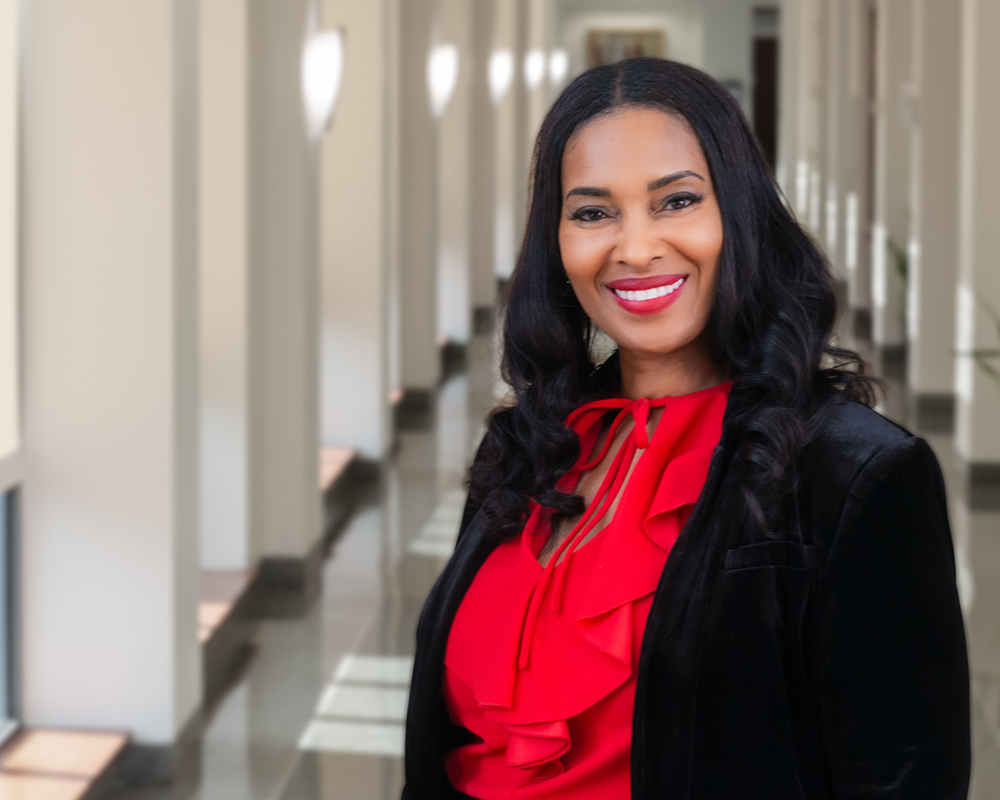
Associate Professor Schenita Randolph, PhD, MPH, RN, FAAN, is advancing nursing science by addressing the root causes of health disparities for Black women, adolescents, families, and communities. She is the Founding Director and Principal Investigator of the HEEAT Lab (addressing Health disparities through Equity, Engagement, Advocacy, and Trust).
Dr. Randolph, whose work has been supported by the National Institute of Nursing Research, reflected on her career path, her dedication to mentoring the next generation of nurse scientists, and her passion for community-engaged research.
What first inspired you to become a nurse scientist and pursue your areas of research?
I was inspired to become a nurse scientist and pursue research focused on HIV and health inequities among Black communities in the southern United States through my work as a public health nurse and because of my lived experiences. In practice, I repeatedly observed that many programs and interventions were not effective because they failed to account for people’s lived experiences—what we now refer to as the social determinants of health, though these forces have always existed.
As I moved into this work, I also became acutely aware of how few Black nurses, researchers, and scientists were leading work in this space, particularly on issues directly affecting Black women and Black communities.
I chose to become a nurse scientist because I wanted to be a voice that understands these realities—not only from theory, but from lived and professional experience—and to bring culturally and socially relevant perspectives to the development of interventions and strategies. My work is grounded in the belief that addressing health inequities requires approaches that honor context, community knowledge, and the structural conditions that shape health long before individuals enter the healthcare system.
What has been the impact of mentorship on your career?
My success has been shaped by those I observed from afar, those I later had the privilege to work closely with, and—most importantly—the belief I learned to cultivate in myself.
In the early stages of my journey as a nurse scientist, I did not have close, sustained mentorship guiding my research agenda, productivity, vision, or long-term goals. I did not have a nurse scientist who looked like me—someone who could offer direction while understanding the racialized and structural realities of navigating this space.
What I did have were examples from afar. I was inspired by Black nurse leaders who embodied leadership, excellence, and courage—women like Janice Brewington, Inez Tuck, Terry Ward, Queen Utley-Smith, Marva Price, and Beverly Malone, to name a few.
As I moved forward in my research journey, I found meaningful, direct mentorship from Dr. Carol Golin at UNC Chapel Hill—someone who respected, supported, and honored my expertise. Over time, I have been fortunate to gain mentors such as Dr. Heather Young from UC Davis. Through my experiences, I have learned that mentorship is far more than a name or a title. True mentorship is about finding someone who deeply believes in your purpose, your position, and your passion.
Today, mentorship is central to who I am as a leader. I am committed to being what I once needed, knowing that while no single mentor can do everything, intentional belief, advocacy, and presence can change the trajectory of a career.
How do you approach mentorship and fostering the next generation of nurse scientists?
My approach to mentorship is grounded in lived experience, intentional action, and collective responsibility. I am a co-founder of Black PhD Nurse Scientists (BPNS), an organization founded by myself and three colleagues—all graduates of historically Black colleges and universities (HBCUs). BPNS emerged directly from our shared experiences as PhD-prepared nurse scientists who were often among the only Black scholars in professional and academic spaces. I navigated microaggressions, isolation, and a lack of mentorship and the opportunity to have, in the same space, individuals who shared my lived realities, perspectives, and ways of knowing.
I also recognized a sobering reality: less than 2% of nurses in the United States hold PhDs and identify as Black. This underrepresentation is deeply consequential. Research consistently shows that representation matters—patients benefit when they see clinicians and scientists who look like them, and communities are better served when those designing research and interventions understand their contexts. Black nurse scientists bring critical perspectives to addressing health inequities that disproportionately impact Black women and communities of color. The value of this work cannot be overstated or underestimated.
Despite there being approximately 33 schools of nursing at HBCUs, only three offer PhD programs. This structural reality informs me of my approach to mentorship. I do not believe in sitting on the sidelines and waiting for the system to fix itself. Instead, I am deeply committed to going to the students and being everything that I needed that has bought me to where I am today: a tenured professor at Duke University School of Nursing.
My mentorship approach is proactive and visible. I intentionally travel to HBCU schools of nursing to engage undergraduate and graduate students—to allow them to see me, hear my story, and understand my career trajectory. My goal is to make the nurse scientist pathway visible, tangible, and attainable, particularly for students who may not otherwise know this career option exists.
At the same time, I am committed to supporting PhD-prepared Black nurse scientists who find themselves in spaces without tailored mentorship or culturally responsive support. Through BPNS, we have created infrastructure to meet these needs—through HBCU tours, virtual webinars, writing retreats, and wellness retreats. This work is about capacity building, not just inspiration.
Ultimately, my approach to mentorship is intentional and generative. Mentorship, for me, is not passive. It is an active, sustained practice of showing up, building pathways, and creating conditions where Black nurse scientists can thrive, lead, and transform health outcomes for the communities most impacted by inequity.
How has being at Duke impacted your work?
Being at Duke has shaped my work in powerful and complex ways. For better or worse, institutional prestige adds perceived value and legitimacy to the work of those affiliated with it. Being associated with institutions like Duke, for some, confers a level of validation that influences how one’s expertise is received.
And while this positive recognition is present, there has also been recognition from communities of color of Duke not being trusted. This is and has been a reality and truth that cannot be ignored. Naming this history is critical for understanding context, relationships, and responsibility.
This has also had an impact on my engagement with Black communities. In my first year at Duke, I had to be deeply intentional about my role, positioning, and presence. I had to demonstrate—consistently—that I was trustworthy, accountable, and community-centered. My work required not only scientific rigor, but relational integrity. For many of us, our scholarship, presence, and engagement have played a role in helping to redefine how Duke is experienced by communities of color.
This work matters because institutional reputation is not abstract—it directly affects who engages with us, who partners with us, and who believes that we are aligned with their well-being. Being at Duke has reinforced for me that advancing equity is not only about research outputs, but about accountability, trust-building, and honoring the lived realities of the communities we serve.