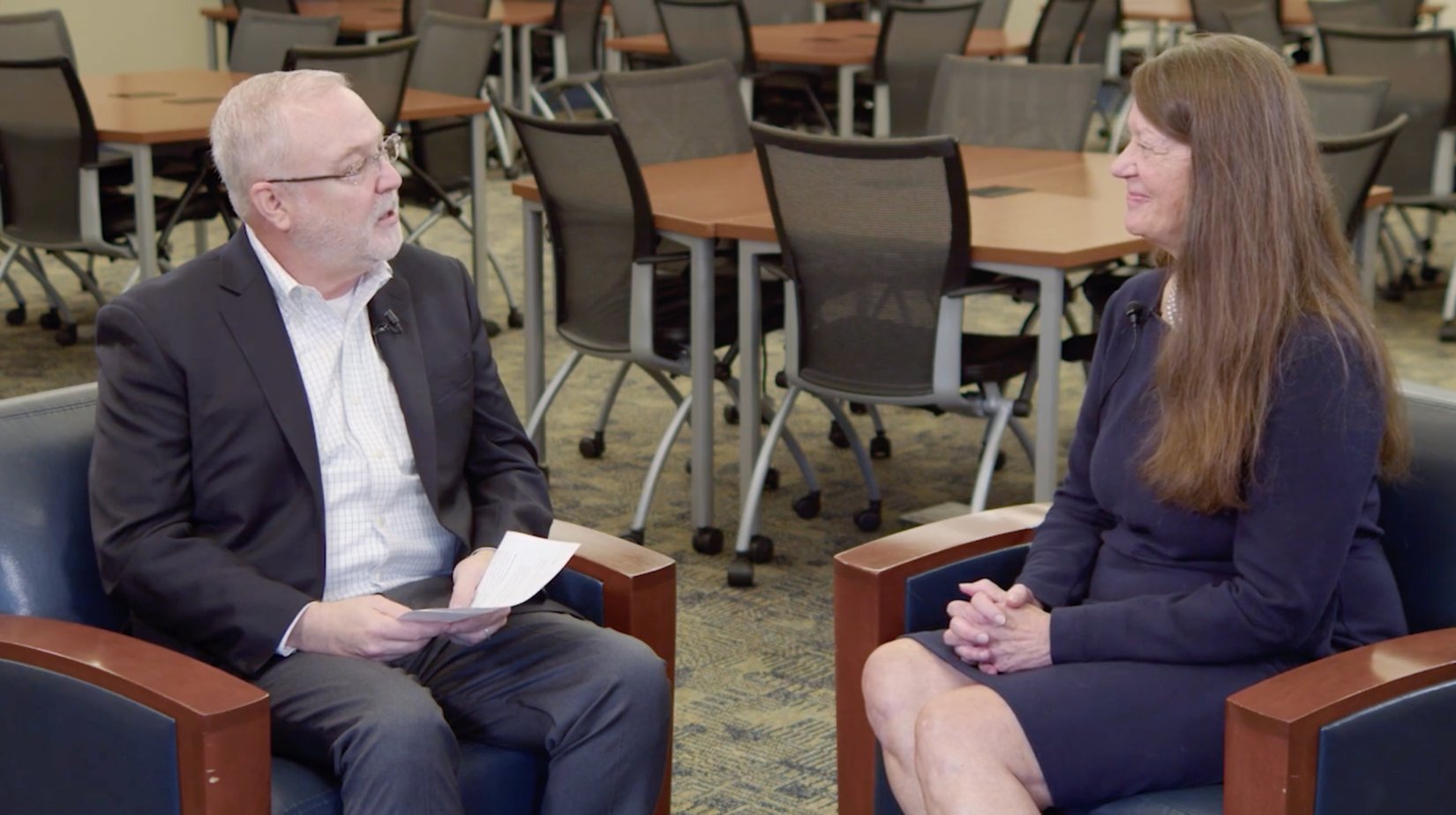
The Evolving Nurse Practitioner Landscape: A Conversation Between Michael Relf & Anne Derouin
Michael Relf, Dean of Duke University School of Nursing, talks to Anne Derouin, Vice Dean of Academic and Student Affairs and dual-certified NP, about the evolving role.
Michael Relf, PhD, RN, ANEF, FAAN, Mary T. Champagne Distinguished Professor of Nursing and Dean of the Duke University School of Nursing, sat down with Anne Derouin, DNP, APRN, CPNP-PC, PMHS, ANEF, FAANP, Professor and Vice Dean for Academic and Student Affairs, to discuss the evolving role of nurse practitioners (NPs). Not only do NPs cover more specialty areas now than ever before, but they also support overall health equity by filling critical gaps for underserved communities. Watch the video (full transcript available on Vimeo) or check out highlights below.
Highlights from the Discussion
Dr. Derouin shared that the very first nurse practitioner was Loretta Ford, EdD, RN—who, together with Henry K. Silver, MD, pioneered the field of nurse practitioners. They specialized in pediatrics, which is also Dr. Derouin’s specialty. (See how to become a pediatric nurse practitioner.)
“I always take great pride in sharing that,” said Dr. Derouin.
Dr. Derouin explained that the nurse practitioner field has now expanded to include other specialties, including neonatal, primary and acute care, family, adult-gerontology, and psychiatric-mental health—specialties that are offered at Duke University School of Nursing. (See which nurse practitioner major is right for you.)
“It’s been a really interesting evolution over the past 60-ish years, where nurses learn these advanced skills to be able to serve as providers and fill critical needs within health agencies across our nation,” said Dr. Derouin.
“Many times, people have said, ‘But they don’t have the years of training of a physician!’” Dr. Derouin added. “But we know that the evidence shows that nurse practitioners and other providers have the same outcomes.”
When asked how nurse practitioners approach healthcare differently, Dr. Derouin explained that, while nurse practitioners fill critical gaps in rural and underserved populations especially, they are present in all areas.
“They are definitely building on their expertise as a registered nurse,” said Dr. Derouin. “They use the nursing model encompassing a holistic approach to healthcare, and then they’re adding on skills—including assessment, diagnosis, management, treatment, care, follow-up—to serve as an integral member of an interprofessional healthcare team.”