
Jennie De Gagne on What AI Can Offer Nursing Education
Duke Nursing Professor Jennie De Gagne shares her first-hand insights on AI in nursing—emphasizing ethical use, accessibility of tools, and hope for the future.
Jennie De Gagne, PhD, DNP, RN, NPD-BC, CNE, ANEF, FAAN, is a Professor at the Duke University School of Nursing and Director of the Nursing Education Major. Dr. De Gagne has experimented with AI in her research and teaching, facilitated global conversations on AI among nurse educators, and created resources to ensure that nursing-specific AI tools are widely accessible. In this Q&A, she details her experience and imparts hope that AI can be embraced in a way that reflects the deeply human values required of nurses.
How long have you been researching and engaging with AI?
My engagement with AI grew out of work I have been doing for well over a decade on cybercivility and cyberethics, studying how people interact, communicate, and behave in digital spaces. As I spent more time researching professional conduct in online learning environments, I kept noticing how quickly the digital landscape was shifting and how new technologies were raising ethical questions that our profession had not yet fully addressed. When generative AI tools like ChatGPT emerged in late 2022, I recognized immediately that this was not just a new technology. It was a new ethical frontier.
I saw how quickly these tools were being adopted in education and clinical practice, often without the guardrails or the critical conversations that should accompany them. That was the moment my research shifted more directly toward AI ethics, AI literacy, and the responsible integration of AI in nursing education. So, while the AI-specific work may look recent, it is really built on a long foundation in digital professionalism, cyberethics, and a commitment to understanding how technology shapes the way we teach, learn, and practice.
In your work, you have acknowledged that there are both challenges and opportunities when it comes to using AI in nursing education. Where do you land on the pessimism-to-optimism scale?
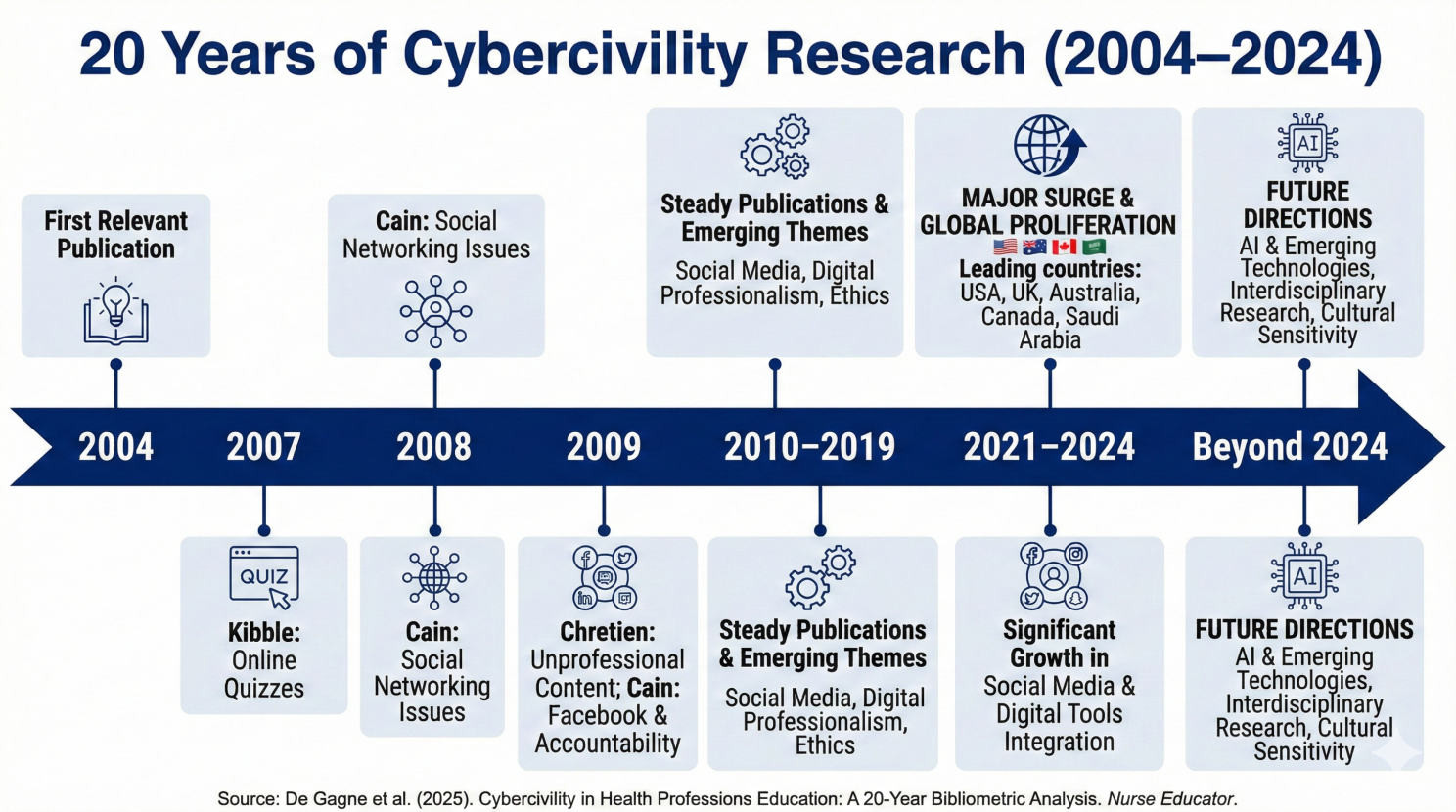
I would describe myself as a cautious optimist. I genuinely believe AI has the potential to make nursing education more personalized, more equitable, and more responsive to individual learners. In my recent article in Teaching and Learning in Nursing, I proposed a framework that integrates Universal Design for Learning (UDL), Differentiated Instruction (DI), and generative AI to help educators create online courses that meet students where they are, adapting content, feedback, and activities to different backgrounds, learning needs, and levels of readiness. That kind of flexibility was hard to achieve at scale before, and AI can be a real partner in making it possible. I have also been experimenting with AI in my own teaching and presentations, and those experiments have taught me a great deal about both the promise and the limits of these tools. For example, I used Gemini’s image-generation features to reimagine a traditional research poster as a series of infographics, exploring different visual formats for different audiences. The process was creative and helped me see my own research through fresh eyes, but I also had to carefully review every output because the AI made errors in timelines and data representation that would have been misleading if left uncorrected.
In one classroom exercise that I found particularly instructive, participants wrote empathetic messages to a fictional student, and an AI generated a parallel message. The group then tried to guess which was human. The results were revealing: most participants mistook the AI’s emotionally dramatic language for authentic human empathy, while more measured, professionally grounded messages were often labeled as “artificial.” That kind of exercise becomes a powerful teaching moment about what empathy actually looks like in professional practice and how easily AI can mimic surface-level emotion without genuine understanding.
The challenges are real. Algorithmic bias can produce outputs that reflect and reinforce existing disparities, particularly for marginalized populations. Over-reliance on AI can undermine the critical thinking and clinical judgment we work so hard to develop in our students. I sometimes call this the “chauffeur problem,” a modern form of automation bias, where we let the machine do too much of the thinking for us. Academic integrity concerns are ongoing, and questions about student privacy and data security remain unresolved. However, I don’t think the answer is to avoid AI but to engage with it thoughtfully, transparently, and within the ethical frameworks our profession already values.
What inspired you to develop resources around AI, and what kind of impact and reach do you hope they will have?
The inspiration for creating resources for others came from a gap I kept seeing in practice. There is a lot of conversation about AI ethics in the abstract (broad principles, position statements, high-level guidelines), but very little that gives nurse educators and students concrete, actionable tools they can actually use in the classroom or clinical setting. The AI Disclosure Coach, or AiDiCo, grew out of my concern that AI disclosure was being treated as a compliance exercise rather than as a meaningful learning opportunity. I noticed that many students were appending generic statements to their assignments, such as “I used ChatGPT for this paper,” without reflecting on what role AI actually played, how they evaluated its output, or where their own judgment shaped the final product. I wanted to create a tool that reframes disclosure as professional formation: a practice of explaining your reasoning, acknowledging the boundaries of AI contribution, and taking ownership of the work. The AiDiCo walks learners through that process step by step, and I made it publicly available because I believe every nursing program, regardless of resources or institutional infrastructure, should be able to support students in using AI transparently and ethically.
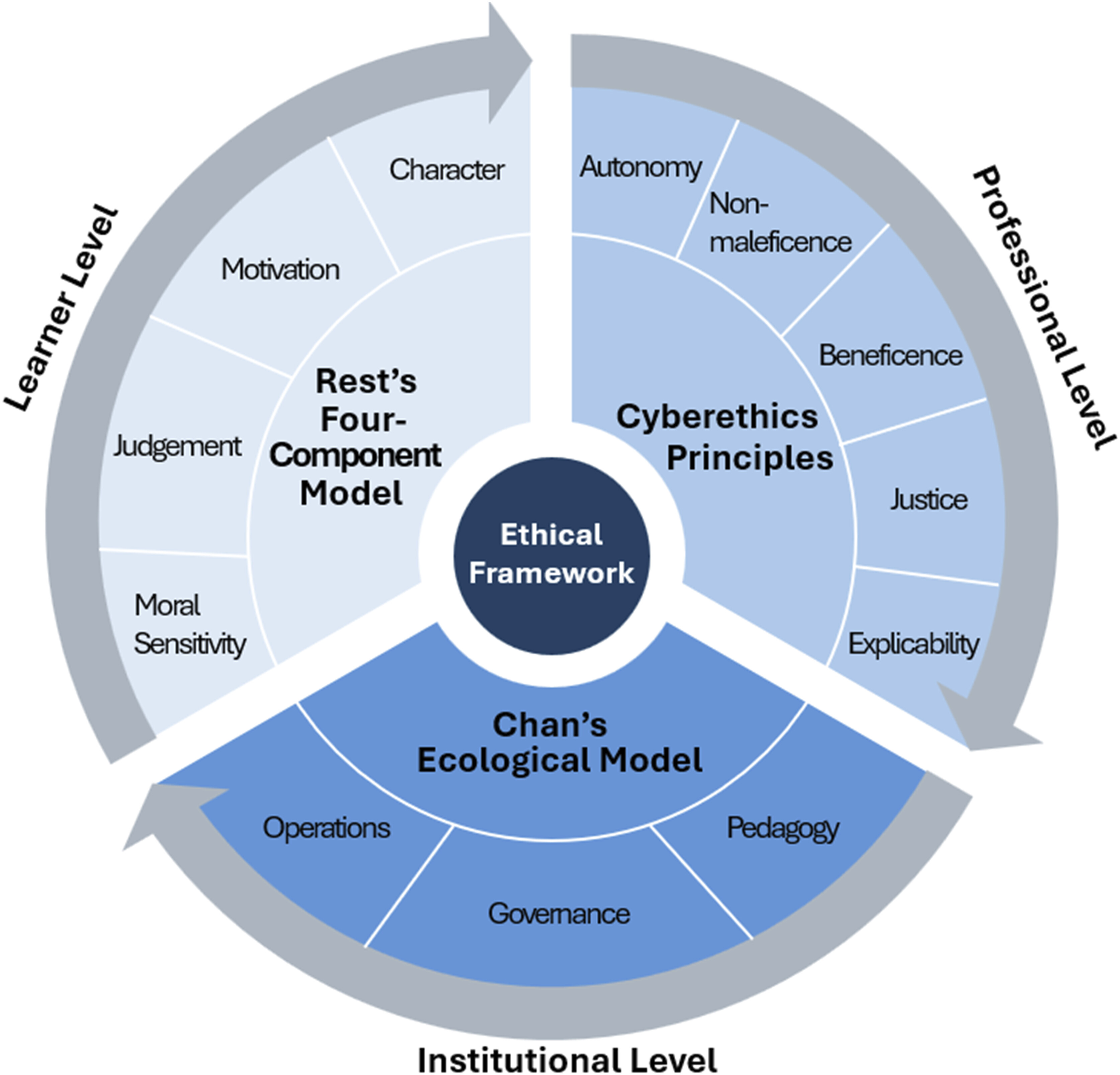
The mini-toolkit published in Nursing Ethics came from a related concern. When nursing students use AI in high-stakes activities like clinical prioritization, such as deciding which patient to see first or how to allocate scarce resources, the ethical stakes are significant. Existing AI ethics resources were not designed with these kinds of nursing-specific scenarios in mind, so my co-authors and I adapted an interdisciplinary AI ethics learning toolkit from Duke Center for Teaching and Learning into a nursing-focused version. The toolkit includes case vignettes, reflection prompts, and rubric criteria that faculty can integrate into simulation, classroom discussion, or clinical debriefing. My hope is that these resources reach beyond any single institution. I want them to support educators who feel uncertain about where to begin with AI ethics, and to give them something practical they can adapt to their own context. I also hope they help shift the conversation from “Should we allow AI?” to “How do we prepare students to use AI responsibly, critically, and with the values that define our profession?”
You were a guest editor of a special issue on artificial intelligence (AI) in nursing and midwifery education in Nurse Education in Practice and subsequently published an editorial on how agentic and multimodal forms of AI could shape the future of this field. What were some of the biggest surprises or takeaways you encountered in putting that issue together?
First, the sheer speed of change. By the time articles moved through peer review, the AI landscape had already shifted. Agentic AI, meaning systems that can reason, plan, and act semi-autonomously, was suddenly a reality, and multimodal models were generating not just text but images, video, and interactive 3D environments. We found ourselves writing an editorial about trends that barely existed when we first issued the call for papers. That pace reinforced how important it is for nursing education to stay engaged and help shape the future thoughtfully and ethically, because this technology is not going to wait for us to feel fully prepared.
Second, I was struck by how global and consistent the concerns were. Whether authors were writing from the United States, the United Kingdom, Hong Kong, or elsewhere, the same themes kept emerging: algorithmic bias, academic integrity, the autonomy of nurses in an age of AI, the risk of over-reliance on machine-generated recommendations. That consistency told me this is not just a local conversation; it is a shared professional challenge that requires cross-disciplinary and cross-cultural dialogue. Perhaps the biggest takeaway, though, was the reminder that the future of education in our field will depend not just on what AI can do, but on the wisdom with which educators integrate it. Compassion, integrity, and reflective practice remain the foundations of nursing education, and those cannot be replicated by any algorithm.
What advice would you give students and faculty seeking to incorporate AI into their nursing education/teaching?
For students, I would say: stay curious, but stay critical. AI is a powerful tool, and learning to use it well is becoming part of professional competence. But never let it replace the thinking that makes you a nurse. When you use AI, ask yourself: What did I learn from this? Did I verify the output? Can I explain my reasoning without the tool? Treat AI as a thought partner, not an authority, and always be transparent about how you used it. At the same time, students and nurses do not need to be AI specialists to use these tools effectively. What matters most is bringing sound judgment, ethical awareness, and a strong commitment to human-centered care to their use.
For faculty, my advice is to be willing to become learners again. This technology is evolving quickly, and the more I engage with it, the more I realize how much there is still to understand. I would caution against calling ourselves AI experts too quickly, because this is a field that requires humility. I would also encourage faculty to start small. Try one AI-supported activity in a course, whether a case study, a feedback exercise, or a disclosure reflection. See what happens. Talk to your students about it openly. Model the transparency and ethical engagement you expect from them. The goal is not to transform teaching overnight. It is to begin the conversation and learn alongside students.
Above all, I believe we need to remember why we became nurses and educators in the first place. Technology should amplify our capacity for human connection, not diminish it. AI’s greatest potential in our field lies not in automation but in amplification, helping us create more inclusive, more responsive, and more thoughtful learning environments while keeping the humanistic values of nursing firmly at the center.
AI Nurses Networks Presents: Professor Jennie De Gagne from Duke University, USA discusses AI in nursing education