
Community Health Lecture Explores the Power of Data, Place, and Partnership
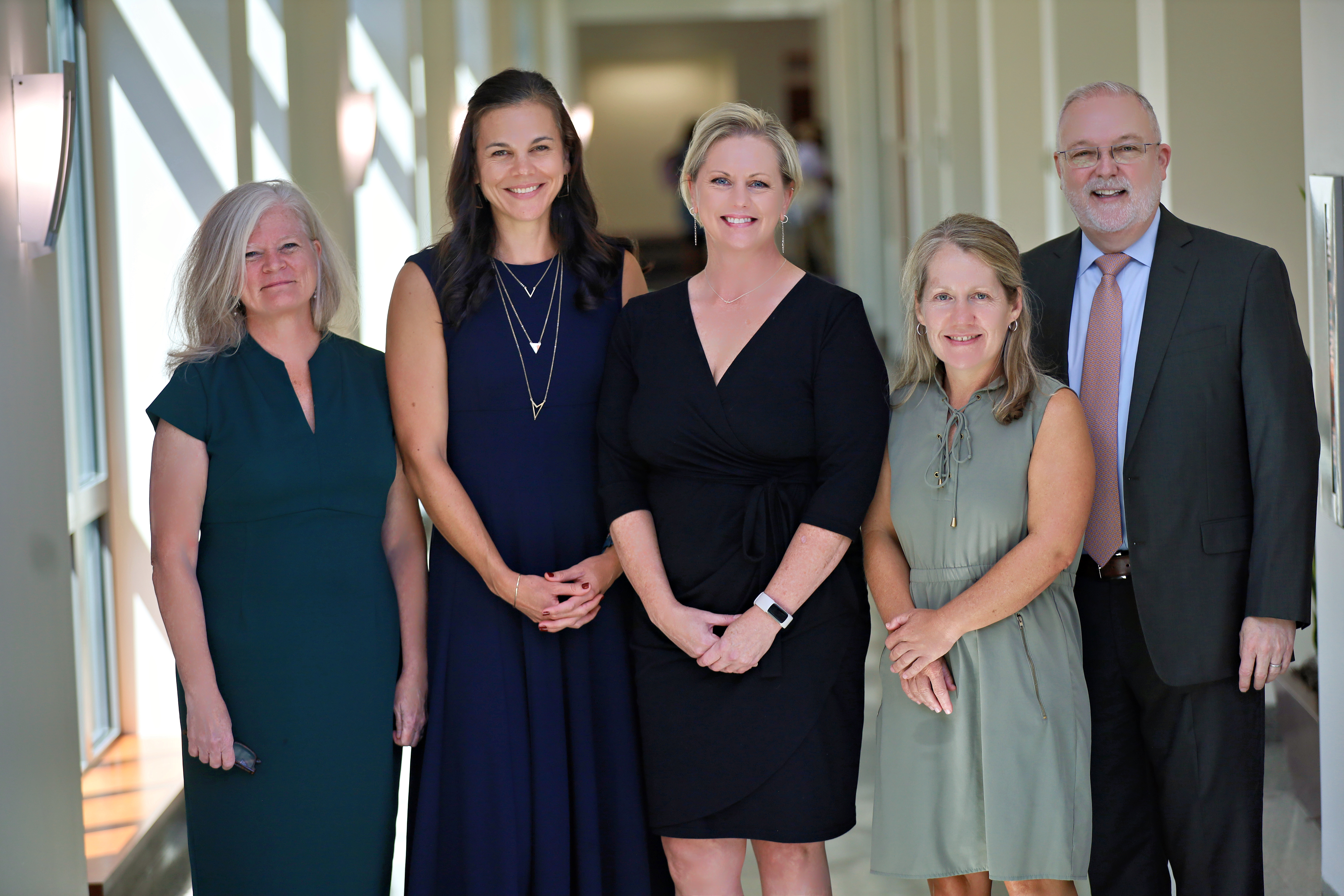
RTI nurse scientist Kelli DePriest challenged the Duke Nursing community to think more expansively about community health nursing and its role in addressing the conditions that shape health.
Health is shaped long before a patient enters a hospital or clinic and long after they leave, nurse scientist Kelli DePriest told the Duke University School of Nursing community during the School’s sixth annual Community Health Lecture, hosted by the Community Health Improvement Partnership Program (D-CHIPP).
Drawing on experiences spanning pediatric critical care, community-based nursing, research, and program evaluation, DePriest argued that community health nursing should not be viewed as a specialty at the margins of the profession. Instead, she described it as an expansive and analytic approach that is increasingly important to nursing’s future.
“Community health nursing is not a departure from nursing’s core,” DePriest said. “It’s an expansion of it.”
DePriest, a nurse scientist at RTI International, leads research and evaluations focused on social drivers of health and strengthening public health systems. She organized her lecture around three interconnected concepts: data, place, and partnership.
Looking Beyond the Numbers
DePriest first challenged the notion that community health nursing is primarily relational or service-oriented while rigorous, data-driven work happens elsewhere.
“Nurses assess. We observe. We identify patterns,” she said. “We collect information, interpret context, and make judgments in situations that are often complex. That is data work.”
The challenge, she said, is ensuring that data adequately reflects what communities experience.
DePriest illustrated that point through her work evaluating public health programs, including an evaluation of a Centers for Disease Control and Prevention initiative to strengthen the public health workforce. In workforce evaluation, she explained, a measure like time-to-hire can be read in different ways. A shorter hiring timeline might look like success, but it could also mean fewer people applied. A longer one could reflect recruitment efforts that produced a larger applicant pool. Input from people closest to the work is essential for interpreting measures like these.
“It’s not just collecting more [data],” DePriest said. “It’s about building relationships and structures that help us interpret it well, and being honest about what our measures can and can’t capture.”
She described a related challenge in the evaluation of the Centers for Medicare & Medicaid Services' Accountable Health Communities Model, which tested whether identifying and addressing health-related social needs could reduce health care use and spending. As DePriest and colleagues reported in Health Affairs in 2023, patients were being referred to community resources for needs such as transportation, food, or housing. However, interviews with model staff, community service providers, and beneficiaries identified barriers to connecting with those services, including geographic restrictions, changing service hours, transportation challenges, and eligibility requirements.
“The gap between what the data shows and what people actually experience is where important questions live,” DePriest said.
Understanding the Role of Place
Her second lens, place, has roots in DePriest’s clinical career. While working as a pediatric intensive care nurse, DePriest cared for a 6-year-old boy she called “TJ,” who experienced an asthma exacerbation so severe that he was in a coma.
The experience prompted her to think beyond his immediate clinical needs to the housing, environmental, and resource conditions that could influence childhood asthma.
“What would have to be different in the environment, in policy, in how we invest in communities for a 6-year-old not to end up on a ventilator?” she recalled asking.
That question ultimately helped propel her toward graduate study and research examining neighborhood factors such as green space and community violence and their relationship to children’s asthma control. But place extends beyond physical geography, DePriest said. It includes housing, transportation, food environments, social connections, and community history. It also encompasses policy.
Her research on the nurse practitioner workforce, for example, has examined the relationship between state scope-of-practice policies and where nurse practitioners work. The findings demonstrate a larger principle: Policy decisions can influence where health care providers practice and which communities have access to care.
“If we want to understand health,” DePriest said, “we have to understand where health is being shaped.”
Partnership as a Form of Practice
Understanding communities is only part of the equation. Improving health within them requires meaningful partnership, DePriest said. She discussed an RTI evaluation of multisector community partnerships addressing social drivers of health. Several characteristics repeatedly emerged among strong partnerships: trust built over time, programs designed with rather than for communities, and shared authority that allowed community members to substantively shape the work.
“Communities are not empty spaces waiting for expertise,” DePriest said. “They are full of knowledge, assets, leadership, and lived experience.”
DePriest also shared research examining public health partnerships across 18 counties in northwest Florida. Social network analysis helped researchers identify important organizational connectors and gaps, while interviews revealed the importance of informal relationships, particularly in rural communities where trust and local connections often take years to develop.
The lesson, she said, is that quantitative information and lived experience are most powerful when considered together.
DePriest distilled the findings from her work into three important distinctions: structure is not the same as relationship; a referral is not the same as a connection; and consultation is not the same as co-creation.
“Partnership in community health nursing is not a soft skill added on to the work,” she said. “In many cases, it is the work.”
Moving Community Health Nursing to the Center
Throughout the lecture, DePriest demonstrated how data, place, and partnership operate together: Data makes patterns visible, place provides context, and partnership helps turn understanding into action.
She concluded with four areas the profession should consider: teaching community health nursing more expansively, investing in it appropriately, elevating community voice within partnerships, and broadening traditional definitions of nursing leadership.
Leadership in community health, she said, can mean convening partners, translating information across sectors, identifying who is missing from decision-making, and connecting people with different kinds of expertise.
For DePriest, those skills are essential to addressing challenges such as housing, food access, transportation, workforce capacity, and rural access, none of which can be addressed through clinical care alone.
Her challenge to the audience was to reconsider where community health nursing sits within the profession.
“Let’s stop describing community health nursing as if it sits on the edge of the profession,” DePriest said. “It’s not peripheral to nursing’s future. In many ways, it is nursing’s future.”
The views expressed in this lecture are those of the speaker and do not necessarily reflect the views of RTI International or its funders.