Quilting Community, Transforming Space: Quilts at the School of Nursing
Quilts serve as the building’s decor and as meaningful creations for staff, faculty, and students.
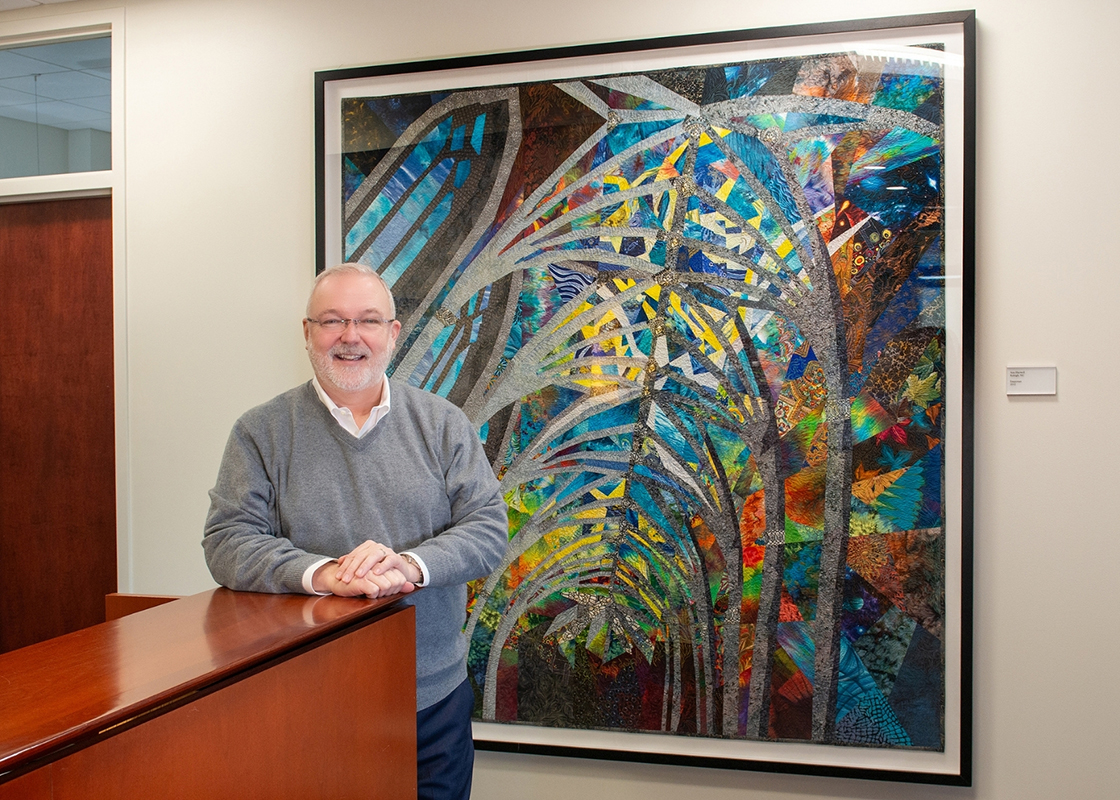
Quilts are on display across the Duke University School of Nursing, bringing color, texture, and warmth to the halls where the community learns, teaches, and works. A part of the chosen aesthetic of the Christine Siegler Pearson Building, quilts are layered with more than just fabric. Through the art of quilting, members of the School of Nursing make meaning, and common spaces become more creative and connected.
Quilting and Nursing: Building on Tradition
Passed from students to faculty, handcrafted by staff, and decorating the very walls of the building, quilts literally make up the fabric of Duke University School of Nursing. They are fitting decor for the School given the documented connection between quilts and health, one that inspired a book by the same name published by Indiana University Press.
As detailed in an article in Complementary Therapies in Nursing and Midwifery, quilts have played a historical role in bringing awareness to serious health conditions like HIV and AIDS, Huntington’s Disease, and cancer—both to commemorate lives lost and to provide a therapeutic intervention for living patients. The process of creating a quilt is said to be healing, just as the quilt itself serves as an object of comfort and symbol of care.
According to Barbara Turner, PhD, RN, FAAN, Vice Dean for Faculty Affairs and Development and Elizabeth P. Hanes Distinguished Professor of Nursing, “Both quilting and nursing have much in common. They represent care, comfort, and creativity, and there is an art and a science to both.”
Expanding the Space: Quilts of the Pearson Building
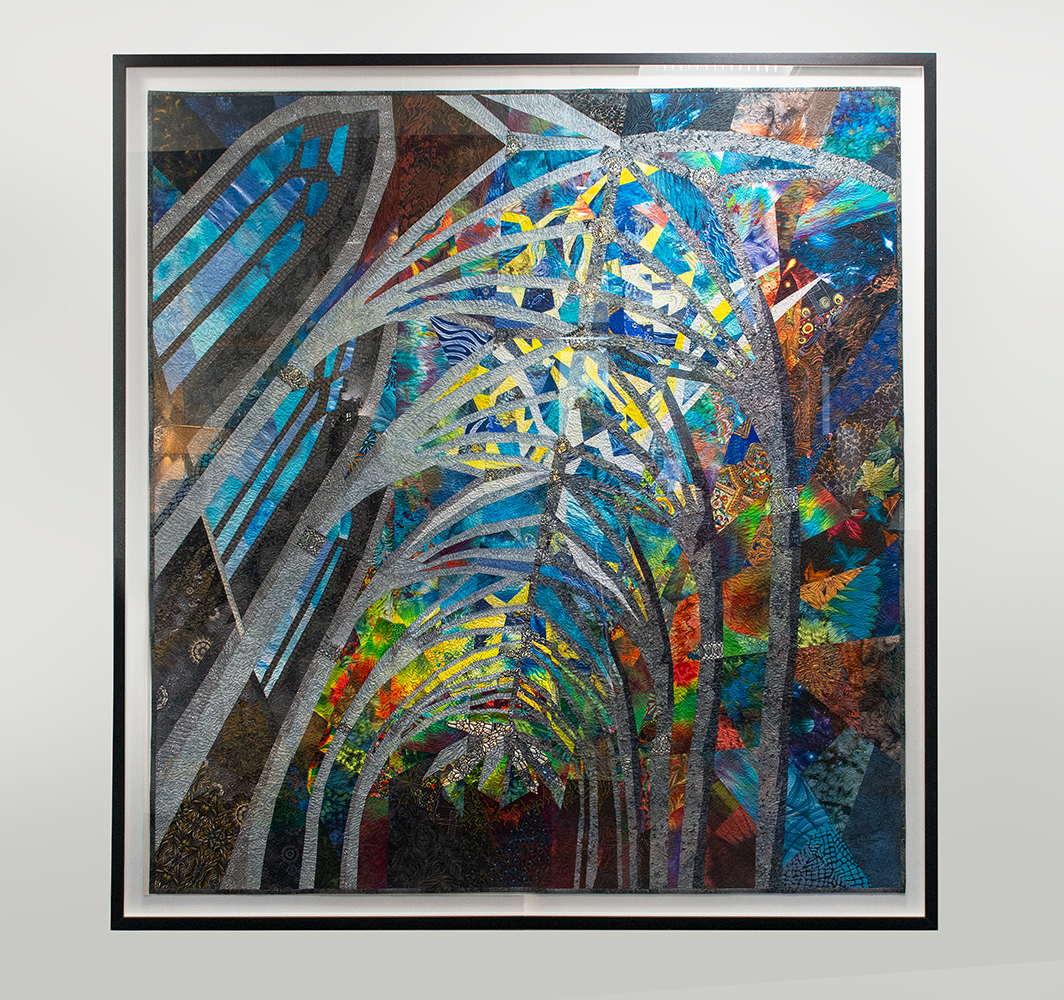
The 14 framed quilts that decorate the Pearson Building were chosen by Dr. Catherine Gilliss, who served as Dean of the School of Nursing and Vice Chancellor for Nursing Affairs from 2004 to 2014. The new decor coincided with a four-story expansion of the Pearson Building, completed around 2014, to accommodate an influx of new students and programs.
“My objective was to populate the new space with art that was representative of North Carolina,” said Dean Emerita Gilliss. “The quilt represented an opportunity to present scenes and designs from North Carolina artists in our space—and introduce our faculty, staff, students, alumni, and visitors to the beauty and intricacy of the quilt.”
Today, the School of Nursing’s current Dean and Mary T. Champagne Distinguished Professor of Nursing Michael Relf, PhD, RN, ANEF, FAAN, has a particular fondness for the quilt that hangs just outside his office.
“This quilt is an interpretation of the inside of a church. It reminds me of the glorious Duke Chapel, and I appreciate it for its size, texture, and color,” said Dean Relf. “I pass by it multiple times a day, and it brings peace to the space.”
Quilting with Care: Long-Time Quilters at the School of Nursing
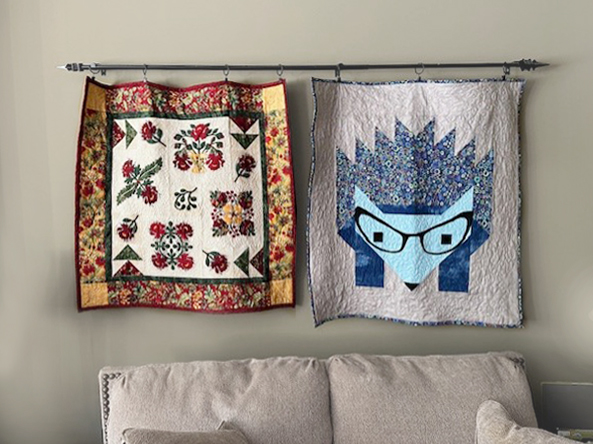
The Chapel-inspired quilt hanging in the Dean’s Suite is likewise a favorite of Dr. Turner, who has been quilting for forty years and called it her “quiet, contemplative hobby.” She identified the Pearson Building’s quilts as fiber art quilts, which are expressive art pieces intended for display rather than functional use.
“Notice how the stitching on top of the fabric gives movement and personality to the art piece,” said Dr. Turner. “I love that we have these quilts throughout the School. Each time I look, I discover a hidden gem in the details.”
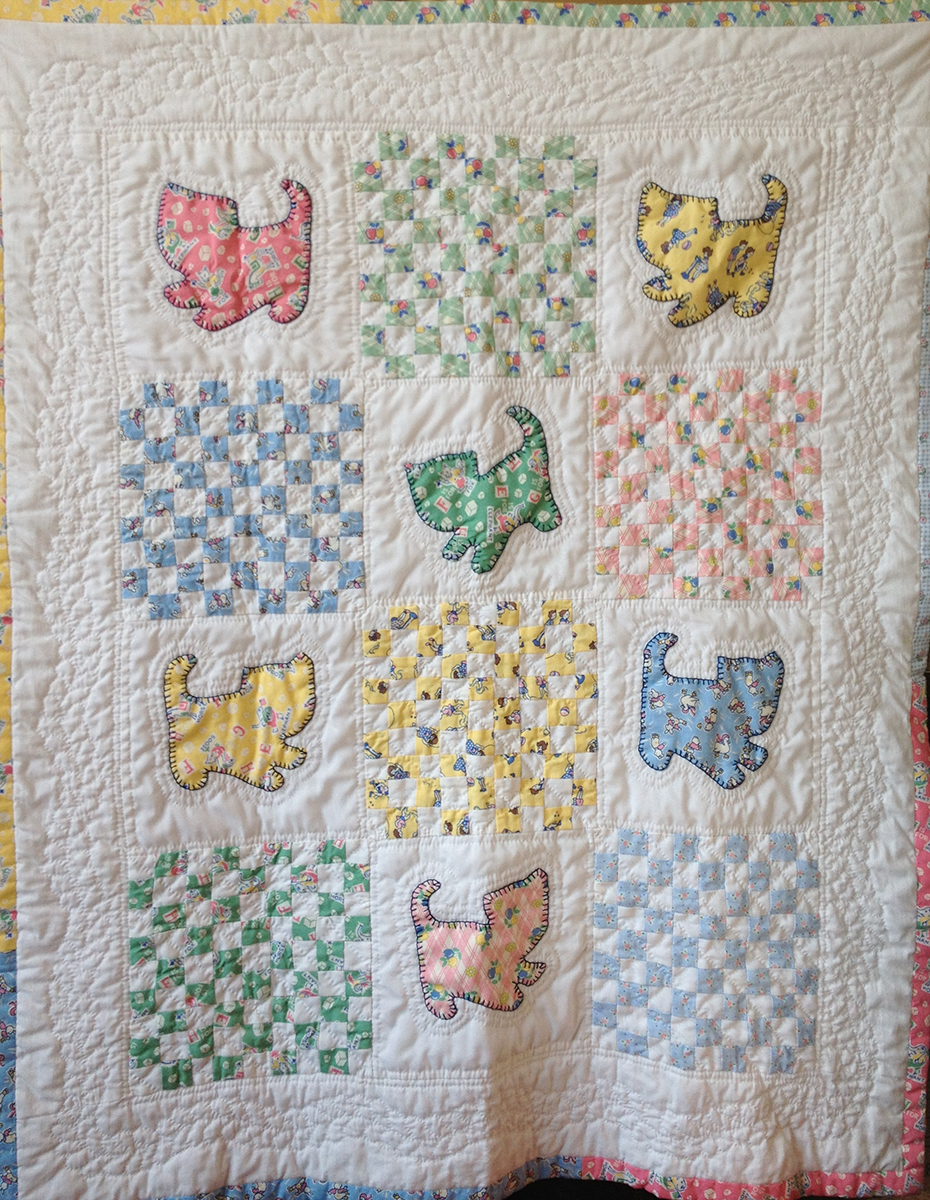
Dr. Turner pointed out that quilting is “neither inexpensive nor fast." One can view it as a “labor of love” that costs time, energy, money, and skill—making quilts a meaningful and valuable gift.
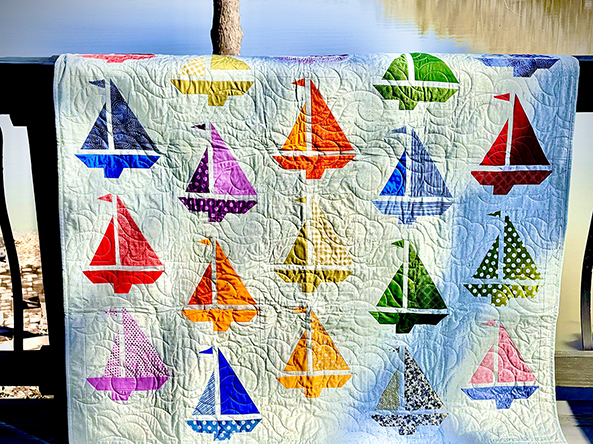
"When I gift a quilt, I spend time thinking of the person, carefully selecting the fabric colors, the design, and the pattern for the stitching on top, which tells a story or evokes an image,” said Dr. Turner. “A quilt I made for my husband, who is a sailor, was nautical in design, and then the stitching on top was a pattern of gentle waves interspersed with larger, more rugged-looking waves that told the story of our sailing experiences. Many of my quilts have written messages in the stitching on top of the quilt.”
Debra Mattice, who worked for the School of Nursing for 19 years and retired in 2025, has also been quilting since the ‘80s, making her first bed-size quilt around 1987.
“Typically, I would machine piece and hand quilt the items that I made,” said Mattice, describing a mixed-method approach that combines speed and precision with a personal touch. “Hand quilting is very meditative and therapeutic for me.”
“I've also remade and repaired vintage quilts for myself and others,” Mattice added. “Most of the quilts I've made, I have given away.”
Adding to the Collection: A Student-Made Quilt
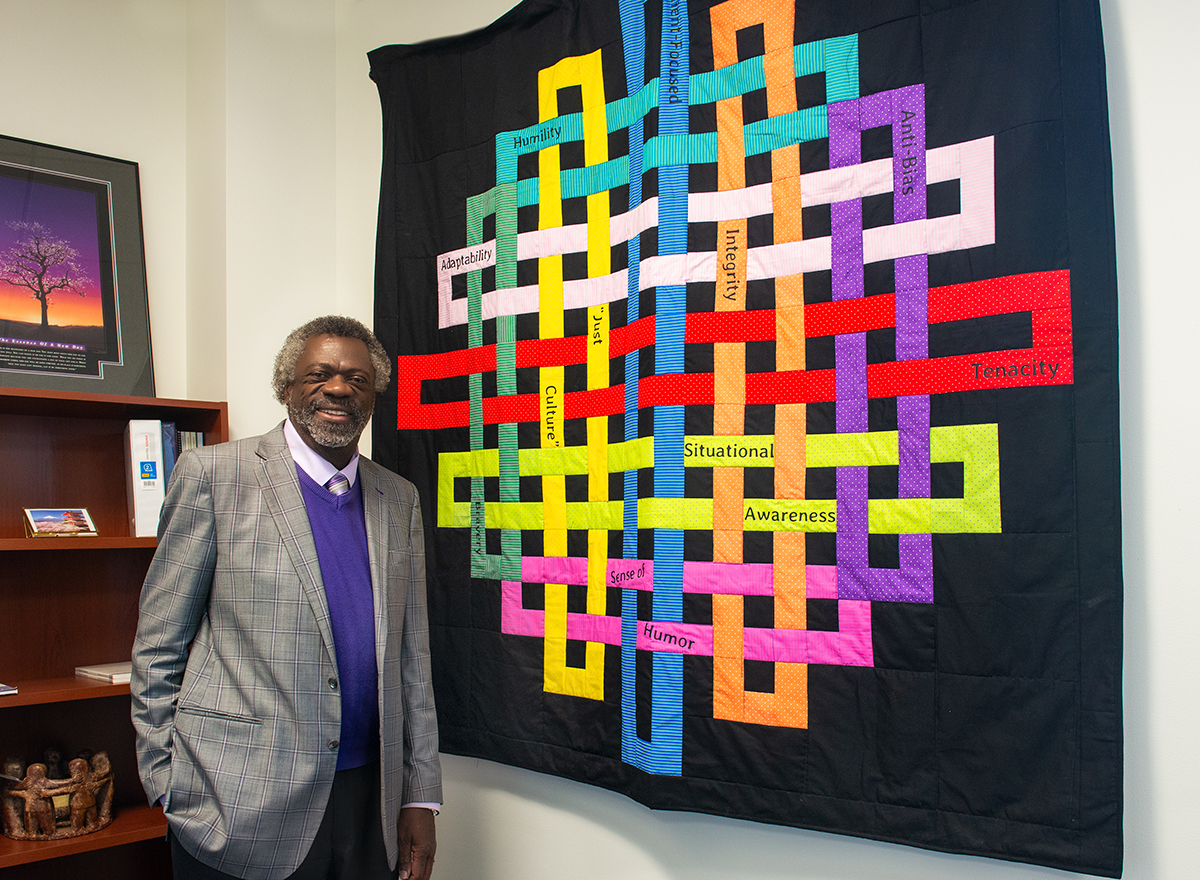
The Pearson Building gained one more quilt when a group of students gifted a handmade quilt to Ernest Grant, PhD, DSc(h), RN, FADLN, FAAN, Associate Professor at the School of Nursing and Vice Dean for Diversity, Equity, Inclusion, and Belonging. Graduating in Spring 2026, these students make up the School’s last Accelerated Bachelor of Science in Nursing cohort
“The students were given a class assignment to talk about the various qualities that nurses must possess and to show examples,” said Dr. Grant. “They surprised me by presenting me with the quilt after they did their presentation. I am very, very honored to have been presented with it.”
A founding member of the Network of Black Male Nurse Leaders and one among the School of Nursing’s orchid lovers, Dr. Grant was gifted the quilt because, according to the students, he embodies those essential nurse qualities identified in the quilt—humility, adaptability, anti-bias, and a sense of humor, among others. The quilt now hangs in Dr. Grant’s workspace in the Office of Diversity, Equity, Inclusion, and Belonging.
At the School of Nursing, quilts are an aesthetic, a hobby, and a meaningful gift. They tell stories, honor individuals, and help create a beautiful, shared space—one where the whole, like a quilt, is more than the sum of its parts.