Transforming Cancer Recovery with the Cancer Distress Coach App
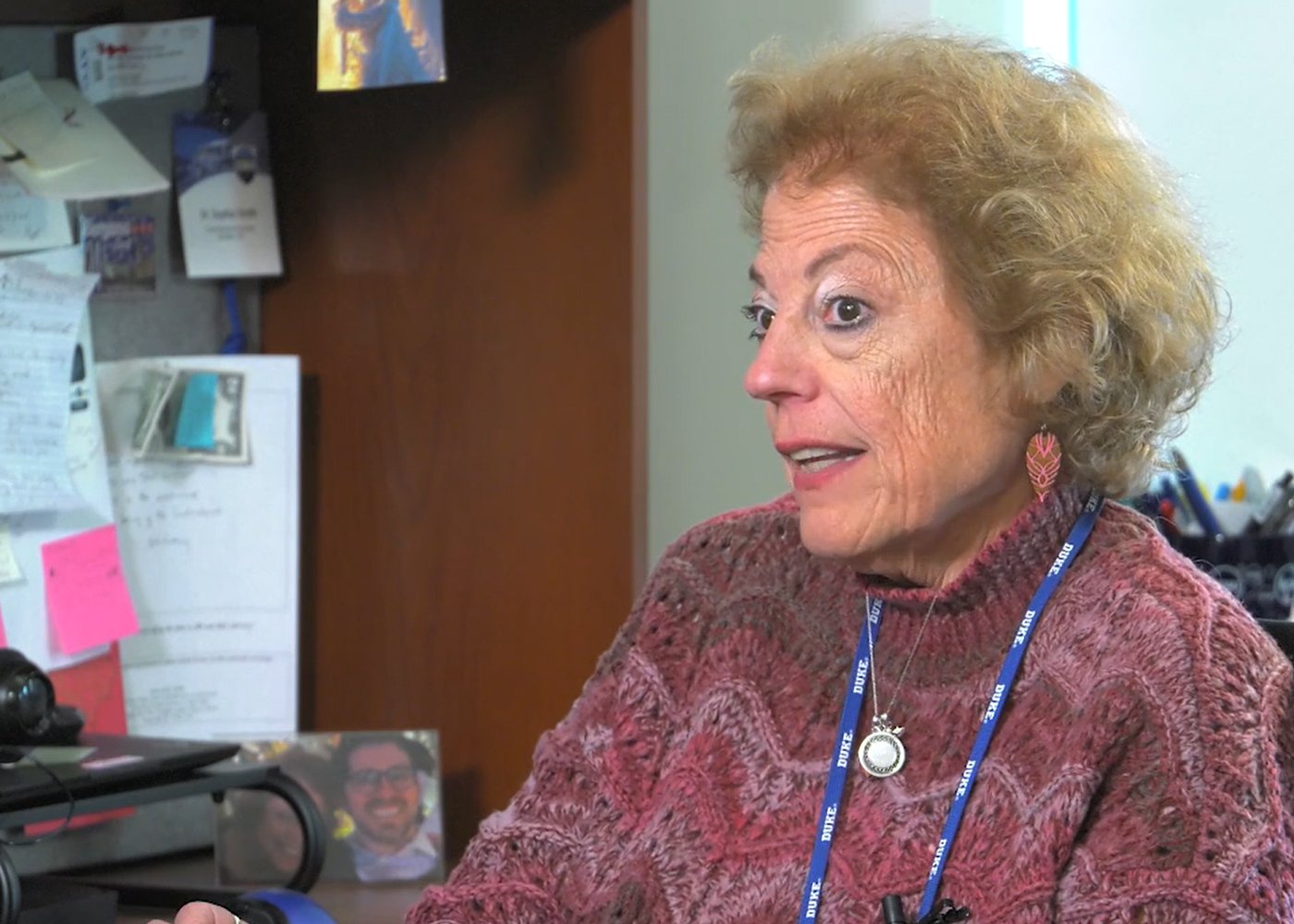
For Sophia K. Smith, PhD, MSW, FAOSW, personal experience and challenges have helped build the foundation of her work.
“In addition to being a social scientist, I’m also a 51-year cancer survivor,” said Dr. Smith, Associate Professor at Duke University School of Nursing. “I experienced Hodgkin’s lymphoma as a teenager, and then many years later… I developed breast cancer as a late effect from the radiation therapy.”
Dr. Smith’s dual perspective as both scientist and survivor has shaped a career dedicated to understanding what happens after cancer treatment ends. While survival rates have improved over the past several decades, Smith has focused her research on a quieter, often overlooked reality: the psychological toll that lingers long after remission.
Recognizing the Invisible Aftermath of Cancer
Throughout her recovery journey, Dr. Smith began to notice patterns among her fellow cancer survivors.
“What I was noticing… were symptoms that weren’t easily identified,” she explained. “Some of my friends might avoid medical visits. Others would constantly check their body for lumps and bumps. Others were having trouble sleeping—nightmares, flashbacks to the treatment.”
These experiences did not always fit the narratives commonly associated with cancer recovery. Yet, through her research, Smith found a well-established framework to explain them: post-traumatic stress disorder (PTSD).
“Through my studies, I discovered that a lot of these symptoms were explained by something called post-traumatic stress disorder,” she said. “You usually think about veterans… or survivors of a motor vehicle accident.”
Applying that understanding to cancer survivorship reframed the problem and opened the door to solutions.
Innovation Expanding on Existing Technology
Before entering academia, Dr. Smith worked as a programmer analyst at IBM. As she began exploring how to address cancer-related PTSD, she saw an opportunity to bridge behavioral health and digital innovation.
“I said, ‘Wow, maybe there’s already something out there that could be used to treat cancer-related PTSD,’” Dr. Smith recalled.
Her exploration led to a partnership with the National Center for PTSD, where Dr. Eric Kuhn and colleagues had developed PTSD Coach for combat veterans. Working with Dr. Kuhn and the National Center for PTSD team, Smith and her collaborators adapted the technology for cancer survivors, creating what would become the Cancer Distress Coach app.
“It was important to me to think about developing an app that could be easily accessible… something that they could use in the moment when they were experiencing these symptoms,” she said.
The result is a behavioral health intervention grounded in cognitive behavioral therapy (CBT), designed to meet patients where they are. The app includes guided tools such as mindfulness exercises, deep breathing, and a specialized strategy known as the “RID tool,” tailored for cancer-related distress. The app also connects users to immediate support resources if they are in crisis.
Gathering Evidence Through Federal Investment
While the idea of a mobile app to support mental health may seem intuitive today, building the evidence base for the app’s effectiveness required sustained investment, particularly from federal partners.
Initial pilot work with just over 30 cancer survivors yielded promising results. “Even after only four weeks… [the app] was effective in lowering symptoms of post-traumatic stress,” Dr. Smith said.
That early data enabled Dr. Smith and her collaborators to secure a major R01 grant from the National Cancer Institute (NCI), launching a large-scale clinical trial involving 477 cancer survivors who had undergone stem cell transplants.
“We wouldn’t have been able to execute this trial without the resources and support from the National Cancer Institute,” Dr. Smith emphasized. “With that federal support, it has allowed us to bring this app… to 477 cancer survivors who are suffering from post-traumatic stress disorder.”
The NCI-funded trial was conducted in collaboration with Dr. Allison Applebaum, a leader in psychosocial oncology at Memorial Sloan Kettering Cancer Center and the Icahn School of Medicine at Mount Sinai, who served as multiple principal investigator on the study. The study also benefited from the partnership of BMT InfoNet, a national organization supporting transplant survivors and families, whose network played a critical role in participant recruitment.
The study used a stepped-care model, reflecting how care is often delivered in clinical practice. Participants began with the app and, if needed, received additional support, including coaching or more intensive CBT interventions.
The outcomes were clear. “We saw not only statistically significant reductions in post-traumatic stress disorder,” Dr. Smith said, “we also saw it in depression and anxiety.” Importantly, these improvements were not short-lived—benefits persisted at least six months after intervention.
For Dr. Smith, these results underscore the importance of federal funding not just in advancing research, but in expanding access to care.
“I have deep gratitude for the federal government for supporting us in this way,” she said.
The Value of Nurse-Led Research in Patient-Centered Care
The Cancer Distress Coach app also reflects a broader truth about the role of nursing in healthcare innovation. Nurses are often closest to the lived experiences of patients, positioning them to identify gaps that might otherwise go unaddressed.
Dr. Smith’s work exemplifies how scientists translate such insights into scalable solutions.
By integrating behavioral health strategies into an accessible, digital format, the app extends care beyond clinic walls and empowers patients to manage symptoms in real time, reinforcing a model of care that prioritizes both independence and support.
Saving and Improving Lives
“People may not think of an app as being a life-saving device,” Dr. Smith said. “But when you think about what this app provides by lowering distress… [survivors] will be less likely to avoid their medical follow-up appointments and experience suicide ideation.”
Yet Dr. Smith emphasized that the app has potential for every user, not just the ones struggling with the most extreme symptoms.
“We really want to promote quality of life in addition to saving lives,” she said. “We cancer survivors know that perhaps best.”
Learn more about how federally funded Duke Research Saves Lives: researchsaveslives.duke.edu
