The Power of Yes: Gina Wilson’s Journey in Nurse-Led Care
Alumna Gina Wilson founded a nonprofit, For Mamas, that trains nurse midwives and equips delivery centers throughout Zanzibar, providing life-saving care and resources for infants.

Gina Wilson MSN’14, DNP’16, who now works as a nurse practitioner in pediatrics, has had a career spanning clinical practice, leadership, and international program development—yet when she reflects on her journey, she is quick to credit her mentors and community. “I’m a piece of the story,” she said. “But it took all of us being pieces of the story.”
Wilson, who received a 2025 Beyond Duke Award for her dedication and leadership in maternal and newborn health, shared her journey, reflecting on the impact of mentorship, the need for nurse-led models of care, and what sets Duke apart.
Answering the Call of Nursing
Wilson’s path to nursing began in high school, where a friend’s cancer treatment and her father’s health issues revealed the profound role nurses play in patient care. “I witnessed the power of nursing,” Wilson recalled. Volunteering as a candy striper cemented her passion, leading her to earn a Bachelor of Science in Nursing from UNC Charlotte. She began her career in women’s health and oncology at Wake Forest Baptist Hospital, quickly rising from bedside nurse to charge nurse.
The Chief Nursing Officer invested in Wilson, encouraging her initiatives, and an attending physician noticed her poring over patient charts and encouraged her to pursue advanced practice, advice that set her on a new trajectory. Wilson was accepted to Duke’s Family Nurse Practitioner (FNP) program, which she chose so she could take care of mothers in pregnancy as well as babies.
A Defining Moment
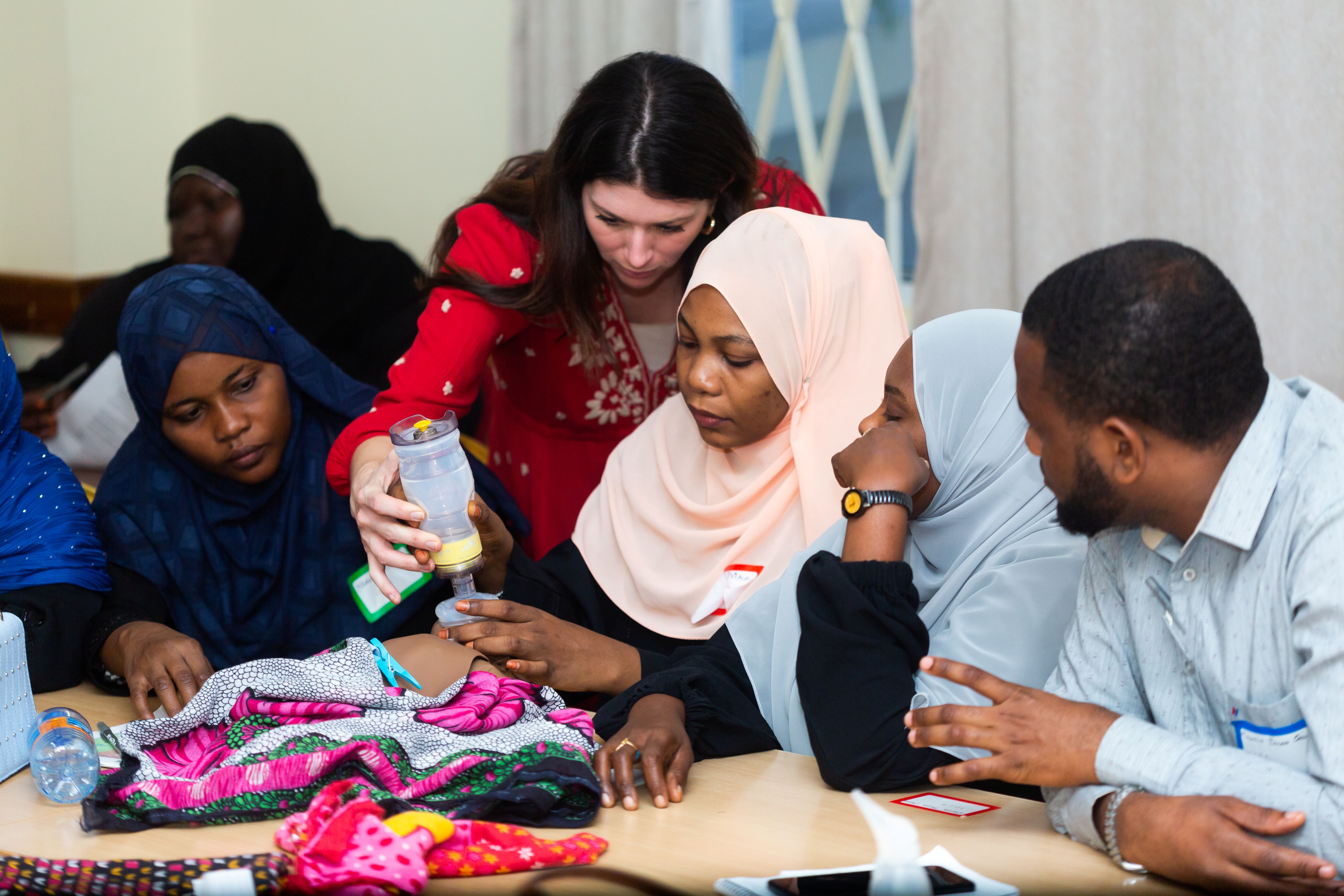
At the end of her master’s program she did a clinical residency, spending a month in Tanzania working at Majengo Health Clinic in Moshi. Wilson immersed herself in the experience, learning about the community and cultural practices. The swing set at the clinic, she remembered, was “how she really got to know the mothers—through their children.”
Wilson loved helping with midwife-led deliveries at the clinic, where babies were born and dried off and wrapped in traditional vibrant-colored cloth called kanga. But the tragic outcome of one delivery—the care team was able to save a hemorrhaging mother, but not her infant with breathing difficulties—would end up becoming the motivation for Wilson’s work moving forward. “[The mother] walked out of the clinic with her baby who hadn’t made it. And that day really changed my life,” Wilson remembered. “I was naïve and didn’t know the reality of loss so many people are dealing with.”
Following this experience, Wilson threw herself into research, finding that conservatively six times as many babies were dying in Tanzania and East Africa than in the U.S. and that birth asphyxia, or difficulty breathing, was a common and often preventable cause of death.
Building Sustainable Change
Wilson entered Duke’s Doctor of Nursing Practice (DNP) program, making this issue the focus of her doctoral project. “I feel so grateful to Duke,” Wilson said. “I think what’s really special about Duke is that Duke said yes to me. They said, you want to do this work in Zanzibar? Yes, we’ll figure it out, rather than pushing me towards other options where they already had programs in place. The yeses and the help along the way have meant the world.”
Wilson searched for evidence-based programs she might help implement and found Helping Babies Breathe, now called Essential Newborn Care 1, which focuses on what to do if a baby has trouble breathing at birth and providing reusable supplies.
Wilson was trained, returned to Zanzibar, partnered with an established nonprofit, worked to gain approval from the Zanzibar Ministry of Health, and began a train-the-trainer program; some of the midwives from this original group are still working to train more midwives today, 11+ years later. Three months after this initial training, Wilson learned that 12 babies had received interventions in the rural part of the island, and the Ministry asked Wilson to continue her work.
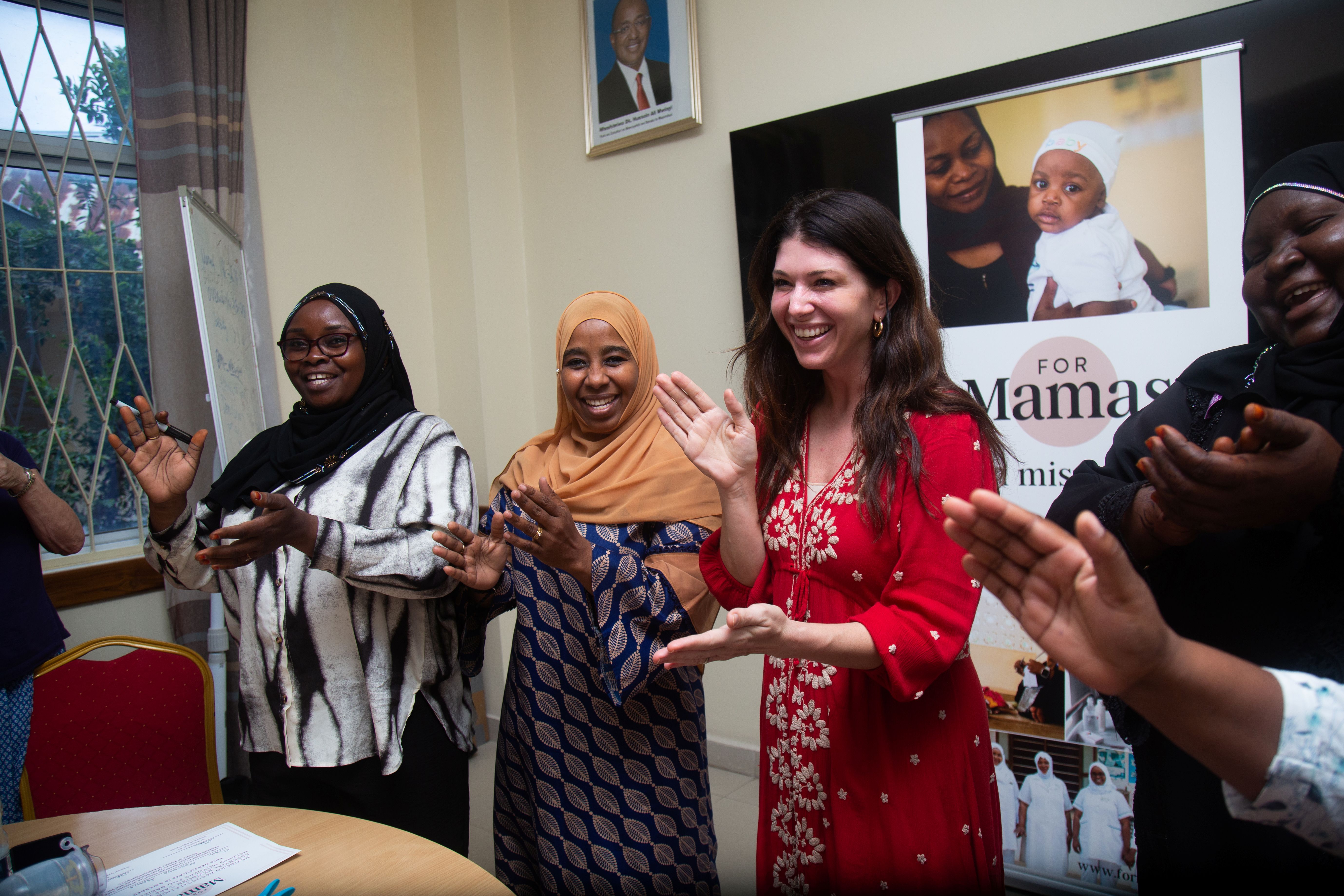
What began as a small project grew into For Mamas, a U.S.- and Zanzibar-registered nonprofit dedicated to maternal and newborn health. “We want to always answer the call of mamas,” Wilson explained. “We are for mamas, we are for their needs and what is important to them. Mothers who have lost a child, or have cried out after—we are answering their calls. Our work is in honor of them.”
To date, For Mamas has trained 380 nurse midwives and equipped 71 delivery centers with reusable supplies. For Mamas, alongside the Zanzibar Ministry of Health, has developed a new role of Clinical Nurse Educator to provide on-job training, supportive supervision, and lead debriefing in their respective facilities. In 2025, For Mamas launched this role with 15 Clinical Nurse Educators serving in 15 facilities. By the end of 2026, the program will scale across Zanzibar, with one Clinical Nurse Educator in all 71 public delivery centers.
“We’re walking the road to sustainability,” Wilson explained. “This is locally led and country-owned.”
Uplifting Nurses and Patients Through Mentorship
Wilson credits much of her success to mentors who believed in her potential—and she’s committed to paying it forward. “So many nurses just want an opportunity,” she says. “We need to encourage nurses and ensure they have a seat at the table. Nurses bring invaluable experience, and much work is done through nursing.”
Her doctoral journey underscores the importance of DNP scholarship in driving evidence-based, nurse-led models of care. By empowering nurses to collect and analyze their own data, Wilson is fostering a culture of informed practice and leadership. “The more we uplift and walk alongside each other, the better,” she said. “It’s been beautiful to see everyone’s growth as we cultivate new leaders and mentors.”
As For Mamas continues to grow, Wilson points to the potential for this and other nurse-led models of care. “Nurses need to be at the table from a global perspective,” she said. “We have a strong voice, valuable experience, and are always looking for ways to enhance patient care.”