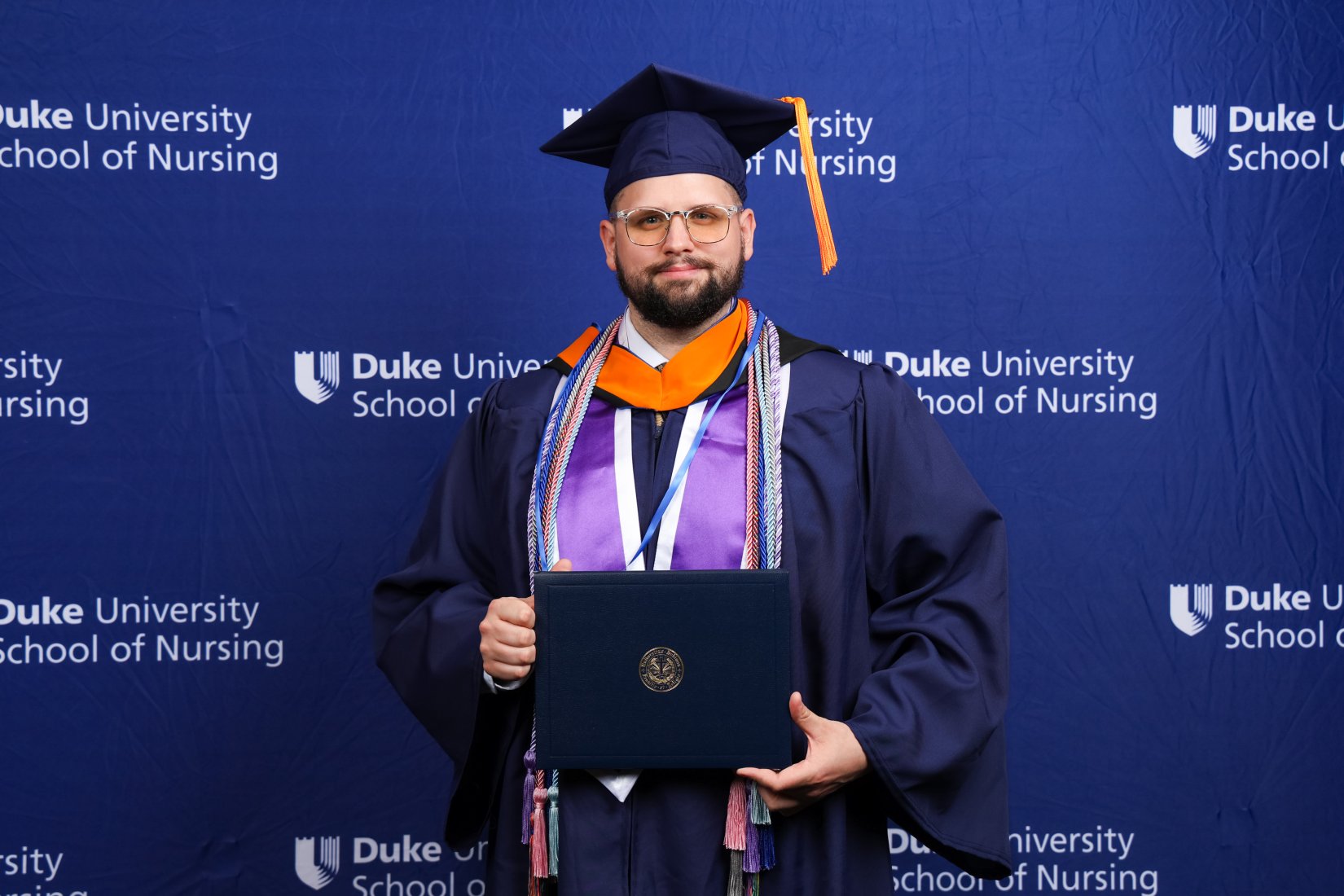
Prepared for Practice: Christian Shepler's First Year in the ICU
Christian Shepler, a pre-licensure Duke Nursing graduate, launched his career as an ICU Registered Nurse at Mayo Clinic. In his first year, he has leaned on Duke’s clinical preparation, critical thinking, and communication training to care for high-acuity patients with confidence.
When Christian Shepler, BSN’25, graduated from the School of Nursing’s pre-licensure program, he stepped directly into one of nursing’s most demanding environments: the ICU. Now, just over a year into his career, Shepler reflects on the lessons, clinical preparation, and communication skills that helped him move from student to confident bedside nurse—and how Duke prepared him for the pace and pressure of high-acuity care.
Christian, tell us about your current role.
Currently I am an ICU Registered Nurse in a highly specialized Cardiovascular Surgical and Transplant ICU at Mayo Clinic. Our unit cares for some of the most complex patients, including those recovering from heart, lung, and valve surgeries and transplants, as well as patients supported by advanced cardiac devices. It is a large, high-acuity unit with patients referred from across the country and around the world, which creates an incredible learning environment.
Looking back as you complete your first year as a nurse, what has surprised you most about the transition from student to professional practice?
What surprised me most was the moment I took my first patient independently without a preceptor beside me. Orientation went smoothly for me, but nothing fully prepares you for the realization that you are now the primary advocate and caregiver at the bedside. In the ICU, where many assignments are one nurse to one patient, you become the key link between the patient and the interdisciplinary team.
I was also surprised by how often nursing requires making kind decisions, rather than simply nice ones. Sometimes the kindest thing for a patient is encouraging them to do what is difficult but necessary for recovery—getting out of bed, walking, staying awake during the day, or participating in therapy when they feel exhausted. Those moments taught me that compassion is not always comfort; often, it means helping patients do what will truly heal them.
Can you share a moment from your first year on the job when you realized that Duke had prepared you for this?
One of the clearest moments I realized how well Duke prepared me was when I compared the amount of clinical experience I had received to some of my peers from other programs. Duke’s emphasis on hands-on learning, especially through our capstone experience, gave me extensive ICU exposure before graduation.
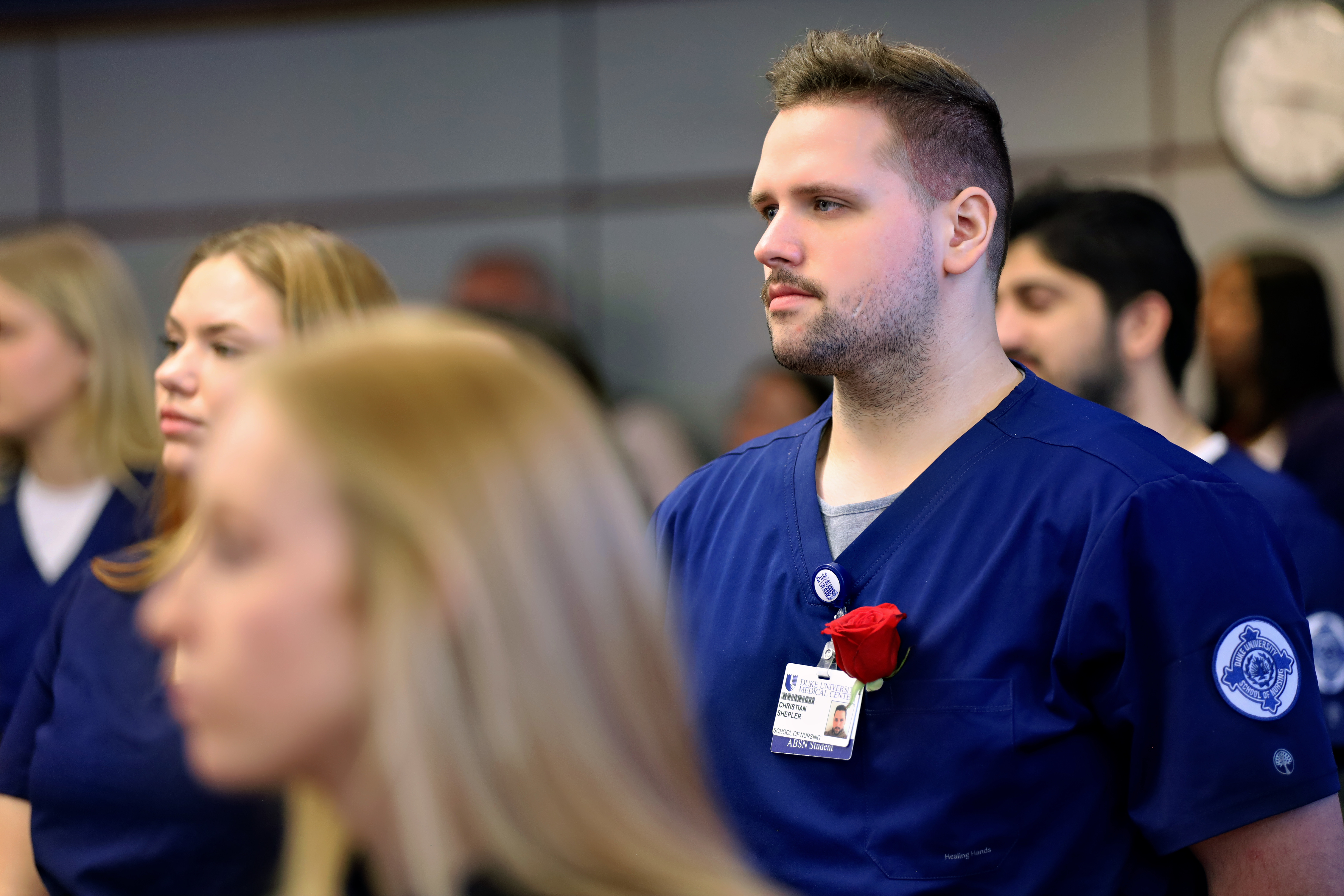
By the time I started as a new graduate nurse, I had already completed well over twenty ICU clinical shifts. That experience significantly reduced the learning curve and gave me confidence stepping into a high-acuity environment. Duke didn’t just prepare me academically—it prepared me to function in real clinical settings from day one.
What aspects of your Duke education have you leaned on most in your day-to-day work—whether clinical skills, critical thinking, or something less tangible?
One of the most valuable lessons I use daily is therapeutic communication. At Duke, we learned early on how to speak with patients in a way that motivates, reassures, and builds trust.
In healthcare, many people are experiencing the most stressful or frightening moments of their lives. Being able to ease anxiety, provide clarity, and help patients feel supported is just as important as any technical skill. Some of the most meaningful moments in nursing come from simply helping someone feel less afraid.
What advice would you offer current Duke nursing students or new graduates who are about to start their first year in practice?
Have grit, resilience, and patience. Your first year will challenge you in ways that help you grow both professionally and personally. Every shift is an opportunity to become a better nurse, but you also have to remember that caring for others starts with caring for yourself.
Whether you are balancing family, relationships, friendships, or personal responsibilities, how you manage your own well-being directly impacts how you care for patients. Prioritize sleep, health, and recovery. Nursing is demanding work, and sustaining yourself is just as important as sustaining others. If you take care of yourself, you will be better able to show up as the kind of nurse your patients need.
What is next for you?
Personally, I recently got engaged, and my fiancé and I are celebrating with an upcoming trip together before the next chapter begins. Professionally, I plan to apply to CRNA school and am currently preparing by taking the GRE in May, followed by the CCRN once I meet eligibility requirements.
Long term, I hope to return home to North Carolina later this year and continue building both my career and personal life there. Right now, I’m focused on working hard, staying grateful, and taking each opportunity as it comes.
Learn more about our accelerated pre-licensure Master of Nursing program: