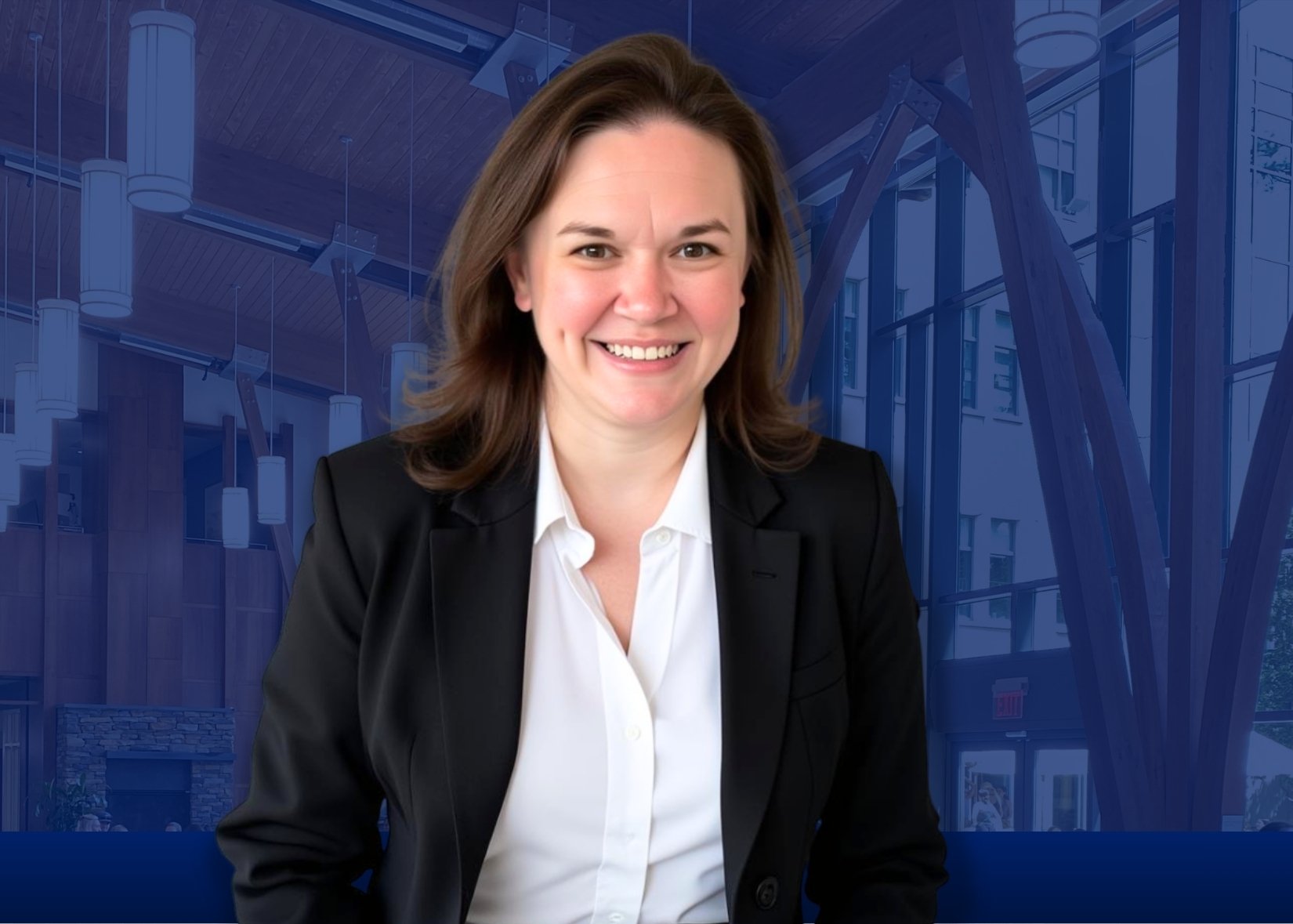
Advocating for Nursing Education and Workforce Sustainability
Doctoral student Jeanie Jones shares her experiences advocating for the nursing profession and innovative education.
Jeanie Jones graduated from Duke University School of Nursing with her Master of Science in Nursing (MSN) in December 2025 and has remained at the School to pursue her Doctor of Nursing Practice (DNP). Her DNP work—and her recent student trip to Capitol Hill—are geared towards improving nursing education and new graduates’ transition into the nursing workforce.
What made you choose Duke University School of Nursing for your MSN degree?
I chose Duke for my MSN because I knew I wanted to build my career as a nurse educator on the strongest foundation possible. As one of the top-ranked programs for nursing education, it felt like the kind of environment that would really push me to grow, not just check a box. I was also really drawn to Duke’s emphasis on innovation. I didn’t want to learn how things have always been done; I wanted to learn how to think differently about education and explore new possibilities for education in the modern healthcare environment.
What led to your decision to remain at Duke University School of Nursing and pursue your DNP degree?
I've always wanted to get a doctorate. But I had to decide whether to go for a PhD, which is more research-based, or a DNP, which is more practice-based. I chose to go the DNP route because it felt more like a role in which I could have more of an immediate impact on the nurses and students I support. I love the DNP model of taking existing research and helping to apply it to daily practice.
What really made me come back to Duke for my DNP was my experience during the MSN. I was challenged in ways I hadn’t been before—in a good way. I had to think more critically, ask better questions, and get more comfortable with not having easy answers. The faculty, particularly my advisor Dr. Jennie De Gagne, didn’t just teach content—they showed what it actually looks like to think and lead as a nurse educator. That stuck with me.
Can you describe your nursing background and the quality improvement project you plan to lead as a DNP student?
I’ve been in nursing for just shy of five years, and I’ve worked most of my career in oncology. I started out as an overnight charge leader in the bone marrow transplant unit and have evolved into more of a system-level educator. I love nursing education, and that's where my DNP work is continuing.
My project is really informed by my experience seeing new nurses just coming off of orientation and feeling like the rug had been pulled out from under them. The night shift in the bone marrow transplant unit is a very high-acuity environment, and new nurses would struggle emotionally with some of the complex patient care situations they'd encounter. During mid-year reviews, I would see a desire to leave—maybe not the profession, but that setting. And that creates so many problems for workforce sustainability because it’s such a specialized skill set to take care of oncology patients. So, when we’re training new nurses, we want to make it an environment they can stay in.
we want to make it an environment they can stay in."
My DNP focuses on what we can do for these newly graduated oncology nurses during those first 12 months of practice that helps give them the tools they need to reduce burnout and increase their intent to stay within an organization. The types of interventions I’m exploring are multi-component, transition-to-practice supports that go beyond traditional residency programs. This might include structured mentorship models that extend beyond initial orientation, integration of psychological support strategies (such as peer support or stress-reduction frameworks), and continuous competency development with ongoing check-ins to support both clinical confidence and emotional well-being. Evidence shows that new graduate nurses need relational and psychosocial support—not just the traditional competency development that is the hallmark of many nurse residency programs—to sustain their well-being and decrease burnout during this transitional period in their careers.
Simply put: we want new nurses to love being in this profession and for their sense of belonging to be really high. We don't want them to feel like they need to leave for their own mental health, so we need to improve that picture for them.
You also recently attended the American Association of Colleges of Nursing’s 2026 Student Policy Summit in Washington, D.C. What was that experience like?
I was there as a representative of Duke with a group of other students—a prelicensure student, a PhD student, and another DNP student—to advocate for funding initiatives that would support the nursing profession and nursing education. We brought a range of perspectives, from those of us who have never been in nursing practice to those of us who have been practicing nurses and nurse practitioners; I’m also an adjunct faculty member, so I could provide that faculty perspective as well.
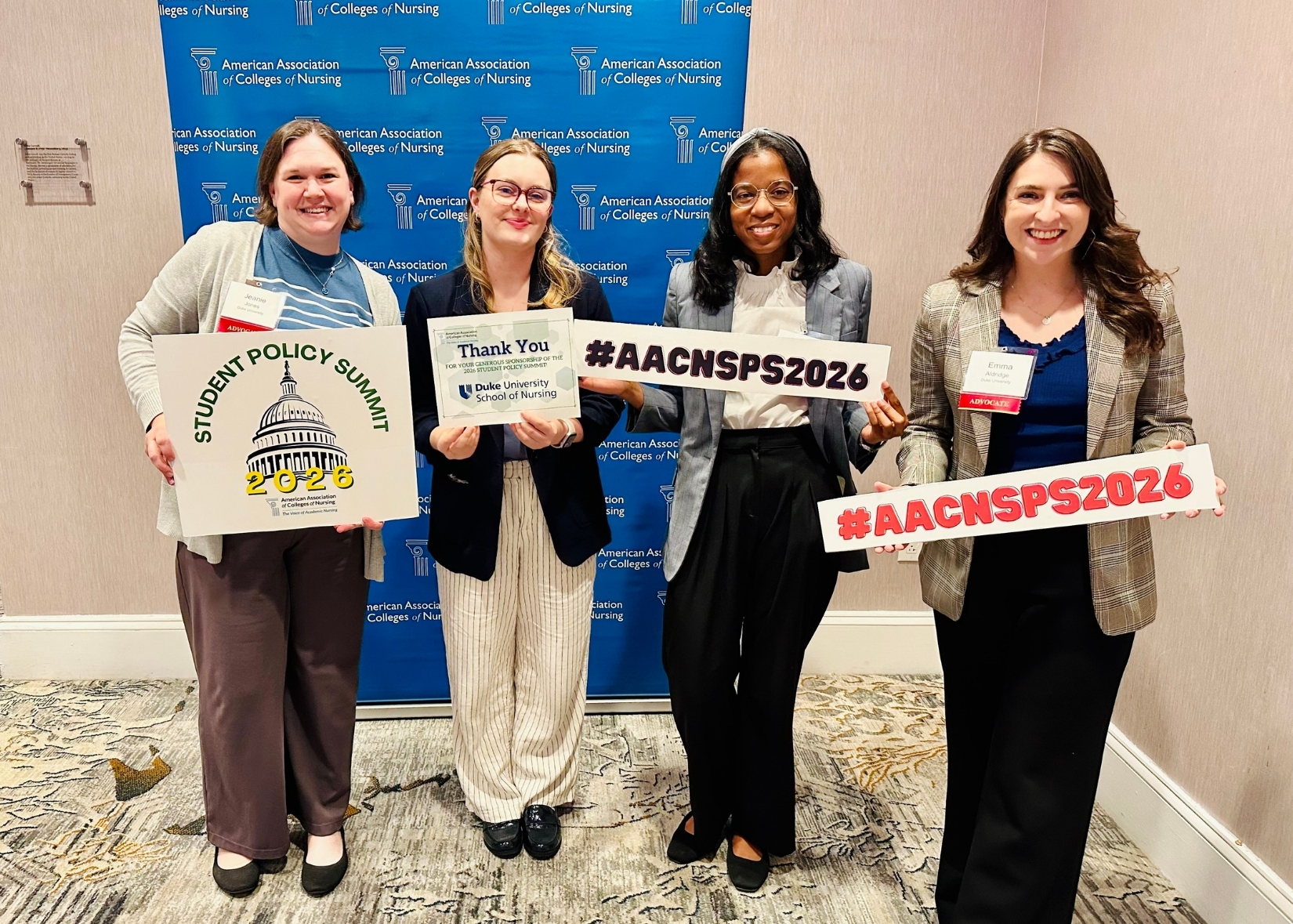
We met with the staff of both of the North Carolina senators' offices and Representative Valerie Foushee’s office. We asked them for their support on the funding initiatives that are before Congress right now that would help support sustainability within both the nursing workforce and nursing education. It’s in the media a lot right now—but this question of whether nursing is recognized as a professional degree has a big impact on students’ ability to complete their degree, which then impacts the number of advanced nurse practitioners we have in the workforce. We also need funding to drive innovative programs for improved nursing education, so that nurses can enter the workforce with more confidence and the tools to help them be successful in that transition to practice. This relates back to my DNP project, and it’s something I’m very passionate about.
It was very encouraging to me that the staff we met with seemed to be very open to our experiences and very supportive of nursing. A lot of them really acknowledged the impact of nursing and nursing education within the Research Triangle, where healthcare is such a big part of the local industry. I felt like we had some champions in our corner that maybe I didn't think we had before that are willing to go to bat to help make nursing stronger in our area.
It was also nice getting to meet students and faculty from all over the country. I met somebody who was representing Hawaii, for example. And it was really exciting to have this nationwide coalition of us all advocating for a shared goal on Capitol Hill.
What makes Duke different from other nursing schools?
One of the things that feels different about Duke is how the curriculum bridges that gap between theory and application, closely connecting everything to real-world practice. In my role in oncology and nursing professional development, I’m constantly able to take what I’m learning and apply it directly, whether that’s building education, thinking about how we evaluate competency, or trying to tackle bigger issues like early-career nurse retention.
My experience so far has been challenging, but in a way that has also been really affirming. It has helped solidify that I do want to move into nursing faculty in the future, especially teaching pathophysiology and oncology. More than anything, it’s helped me grow in how I think—about education, leadership, and the kind of impact I want to have. Duke has helped me be more than an educator; I’m now a systems thinker who wants to drive real change through education.
I’m so grateful to be part of the Duke community, and I’m excited to see where this next phase takes me!