Get RAMPD-UP: Professional Development for Future Neonatal and Pediatric Acute Care Nurse Practitioners
A new mentorship and professional development program led by two Duke Nursing Associate Professors addresses shortage of neonatal and pediatric acute care nurse practitioners.
According to the American Academy of Pediatrics, “neonatal and pediatric acute care nurse practitioners (NPs) make up just 1.1% of all certified NPs, which does not meet current needs.”
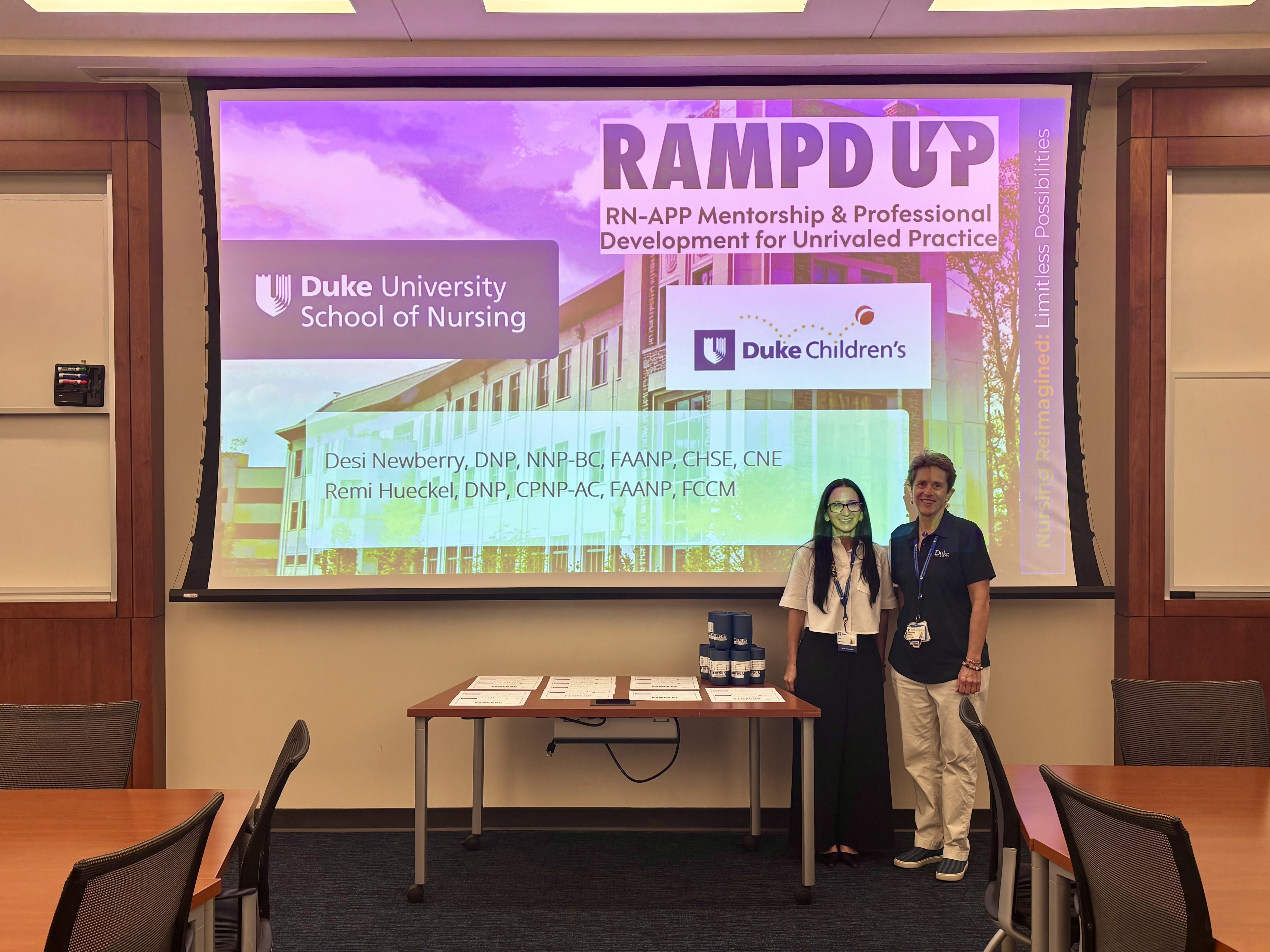
Duke University School of Nursing Associate Professors Desi Newberry and Rémi Hueckel aim to address that critical shortage through a newly launched program called RAMPD-UP, short for “RN-APP Mentorship and Professional Development for Unrivaled Practice.”
The shortage is due to “an aging workforce and retirement, reduced specialty training in prelicensure programs, and the increasing complexity of patient care,” said Newberry, who directs the Neonatal Nurse Practitioner Major at Duke School of Nursing and has more than 20 years of clinical experience.
Hueckel, Director of the School’s Pediatric Acute Care Nurse Practitioner Major, said that her own clinical practice helped inspire RAMPD-UP.
“This was born out of a conversation with some experienced nurses that I work with as a nurse practitioner in Duke Children's Pediatric Intensive Care Unit,” said Hueckel. “The beginning of this was really to try to engage registered nurses who were interested in becoming advanced practice nurses, or at least exploring that, in professional development opportunities that might lead them down that path.”
Registered Nurses (RNs) provide patient care and care coordination as part of an interdisciplinary healthcare team. Advanced Practice Providers (APPs), including Nurse Practitioners (NPs) and Physician Assistants/Physician Associates (PAs), receive advanced clinical training that enables them to diagnose, treat, and manage patients within their scope of practice. APPs help address healthcare workforce shortages, particularly in rural and underserved areas, and have demonstrated high-quality patient outcomes comparable to those of physicians for many primary and preventive care services.
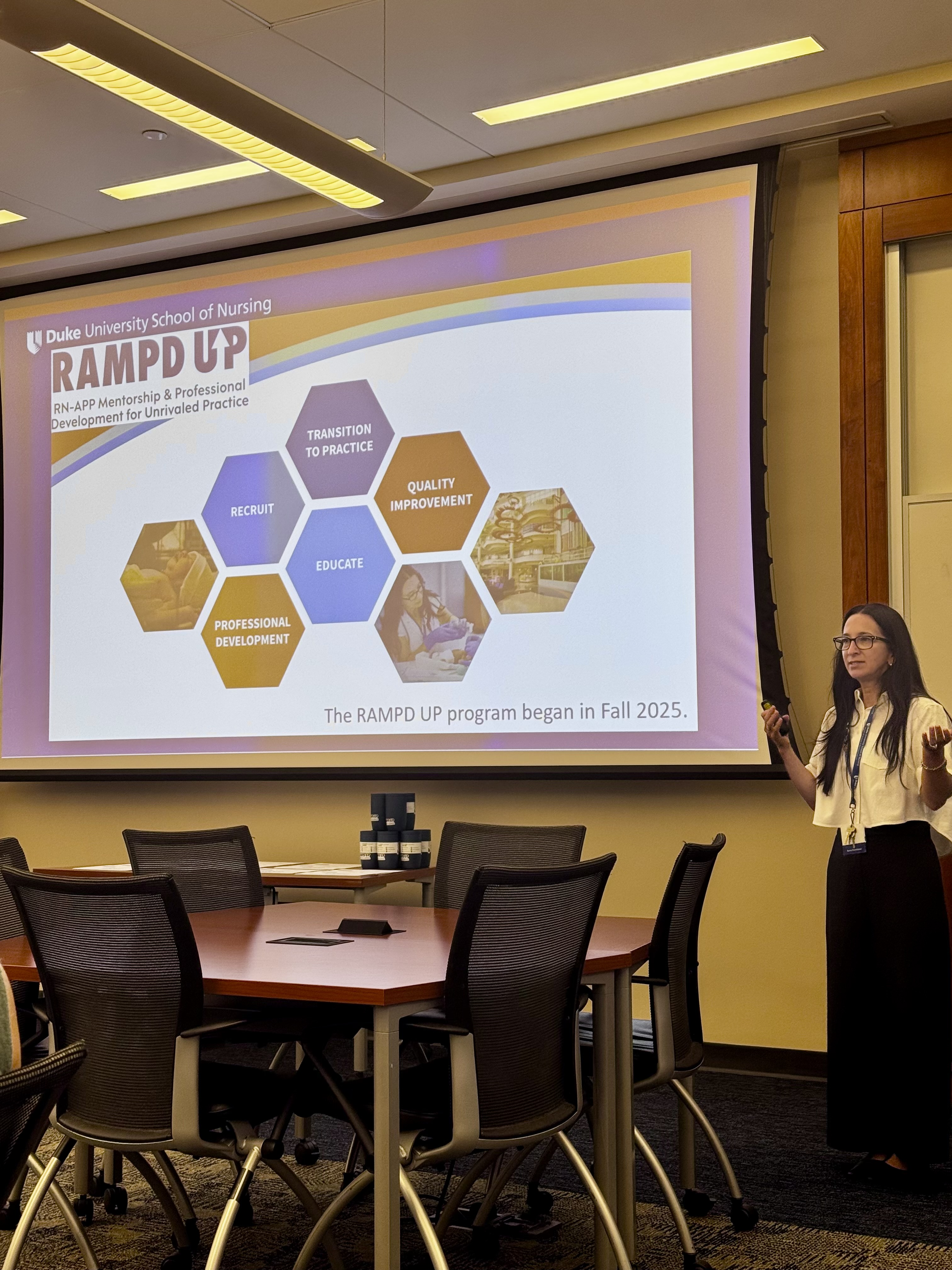
RAMPD-UP is a partnership between Duke University School of Nursing and Duke University Hospital (DUH) that Newberry and Hueckel describe as a “three-pronged strategy to increase neonatal and pediatric advanced practice providers.”
These three prongs are targeted towards: RNs who might want to become NPs, who would benefit from structured mentorship; current NP students, to accelerate their transition to practice; and practicing NPs who are not yet certified in neonatal and pediatric acute care, realigning their education through a post-graduate fellowship program.
The program aims to both increase enrollment in School of Nursing programs and increase the neonatal and pediatric APP workforce—providing participants with simulation-based and competency-based education and structured mentorship, as well as clinical immersion and job opportunities within DUH or other partnering health systems.
“It is designed to support both recruitment and retention, providing an ‘on ramp’ for future advanced practice providers,” said Hueckel.
RAMPD-UP aims to make a lasting impact on both the workforce and patient care. Some of the stated goals are that “at least 75% of NP participants report higher confidence in their ability to apply knowledge,” with at least a “50% reduction in time to independent practice.” It also aims for at least 50% of RN participants to apply to an advanced practice nursing program, like those offered at Duke School of Nursing.
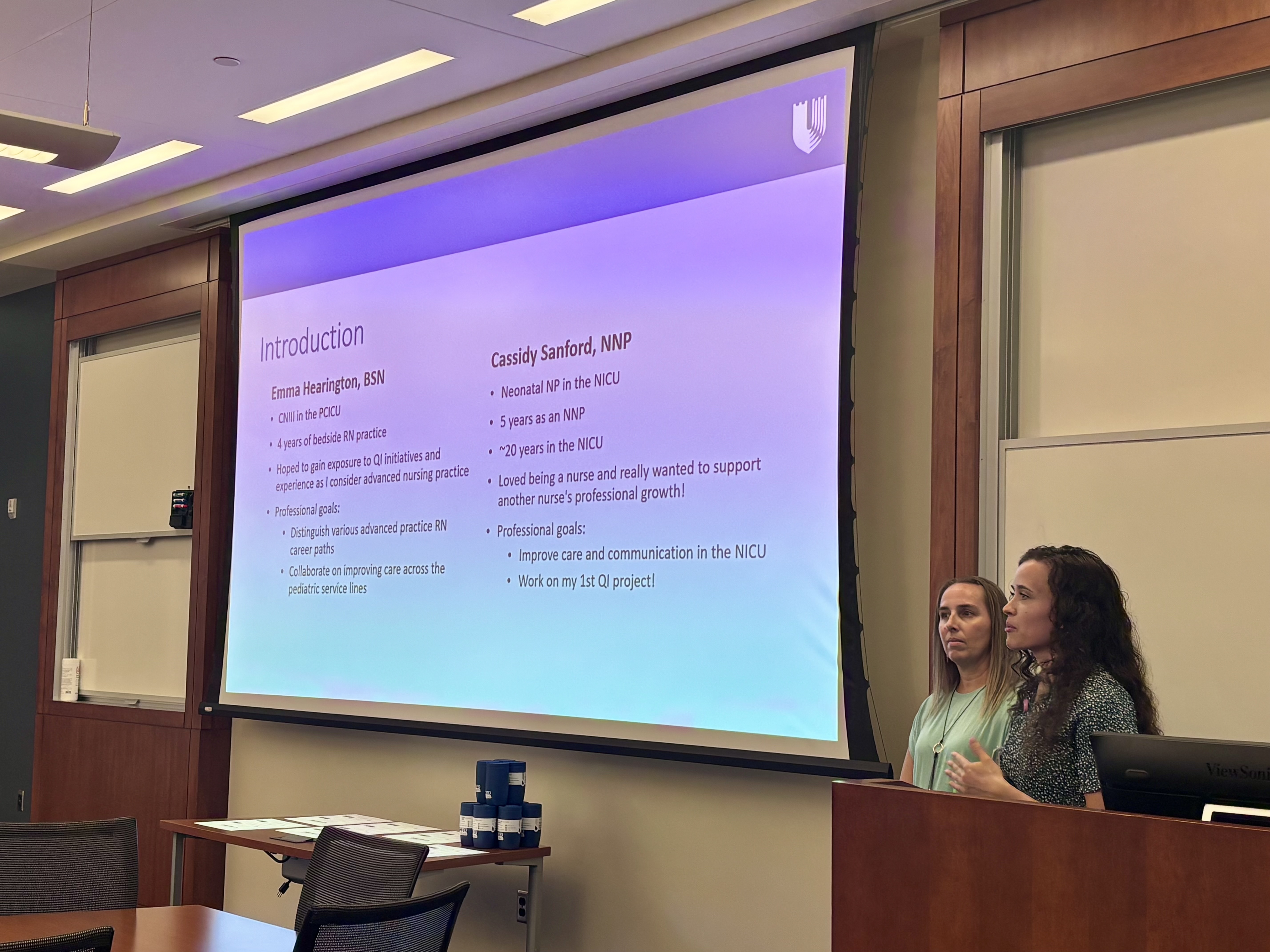
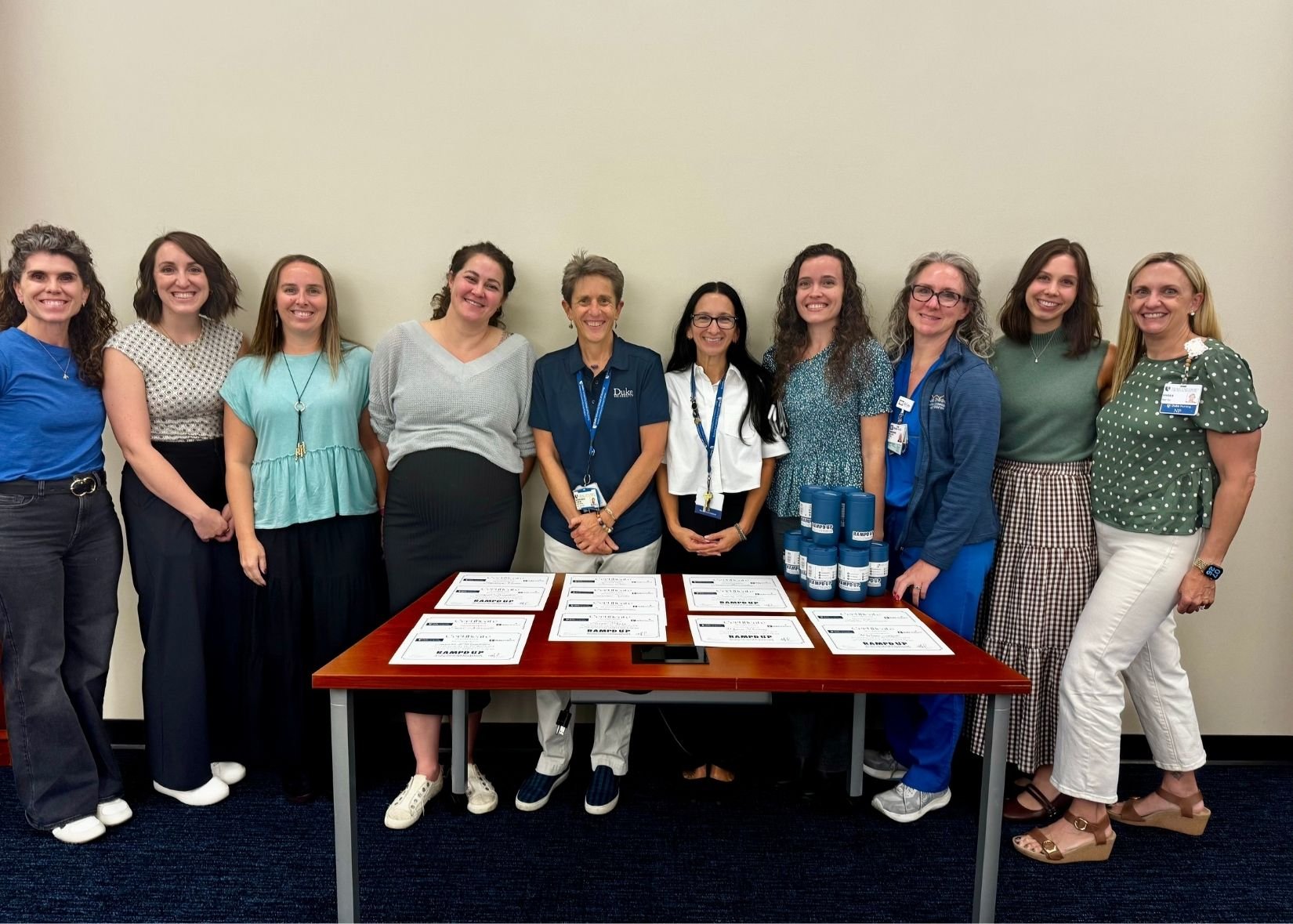
On October 7, Newberry and Hueckel hosted a conclusion gathering for the first cohort of RNs completing the RAMPD-UP program. Participants provided their feedback on the program and presented the quality improvement (QI) projects they led under the mentorship of APPs.
“A major benefit of the program was the opportunity to lead a real-world QI project,” said Dr. Newberry. “Participants developed practical skills in project design, stakeholder engagement, data collection, audit development, intervention planning, outcome measurement, and sustainability planning. Many described gaining a deeper appreciation for the complexity of healthcare improvement and a better understanding of how evidence is translated into practice.”
According to Drs. Newberry and Hueckel, participants also reported “increased confidence, stronger professional relationships, enhanced leadership and communication skills, greater understanding of healthcare improvement processes, and a deeper appreciation for their ability to impact patient care beyond the bedside.”
Drs. Newberry and Hueckel are now actively recruiting the next RAMPD-UP cohort, accepting applications through November 18. The program will begin in January 2027 and will include one year of structured education and mentorship. They are looking for RNs with at least one year of experience working with neonatal and/or pediatric patients at DUHS, as well as APPs who wish to focus on expanding practice, increasing confidence, and advancing career goals.
Questions? Please contact: Dr. Remi Hueckel, ACPNP, or Dr. Desi Newberry, NNP.